


Merhabalar Arkadaşlarım! (Hello, My Friends!)
There’s nothing quite like a Turkish rakı table (rakı sofrası) to teach you that some of life’s most meaningful connections happen over shared plates and clinking glasses. Today, I’m taking you inside one of Turkey’s most cherished social traditions by sharing how an unexpected invitation to a wedding celebration turned into yet another lesson on Turkish hospitality. If you’re curious about authentic Turkish culture beyond the tourist attractions, you’ve come to the right place!
🎉 How It All Started: A Casual Conversation Turns into Unexpected Adventure
It’s funny how life’s most memorable moments often begin with something as simple as catching up with an old friend. About a month ago, after not seeing my friend Hazar (you may remember him from this post) for months, we finally managed to meet for drinks. There’s something special about those friendships where time apart doesn’t matter—we picked up exactly where we left off, as if no time had passed.
When we met, one of my first questions was about his sister Hüma and whether she had gotten married yet. “Actually,” he said with a smile, “the wedding is this coming weekend!” After that, we spent a couple of hours reminiscing and laughing, and I left feeling that warm glow that only good conversation with a true friend can provide.
Imagine my surprise when, about an hour after we parted ways, my phone buzzed with a text from Hazar: “Are you available to attend the wedding?” After checking with his sister and parents, he sent a follow-up that made my heart leap—I had an official invitation to my first Turkish wedding!
And just like that, my weekend plans transformed from thesis writing and language practice to witnessing one of the most significant cultural celebrations in my new home country (the Turkish wedding), followed by an equally meaningful social experience: my first rakı table.
💍 The Wedding: A Cultural Immersion
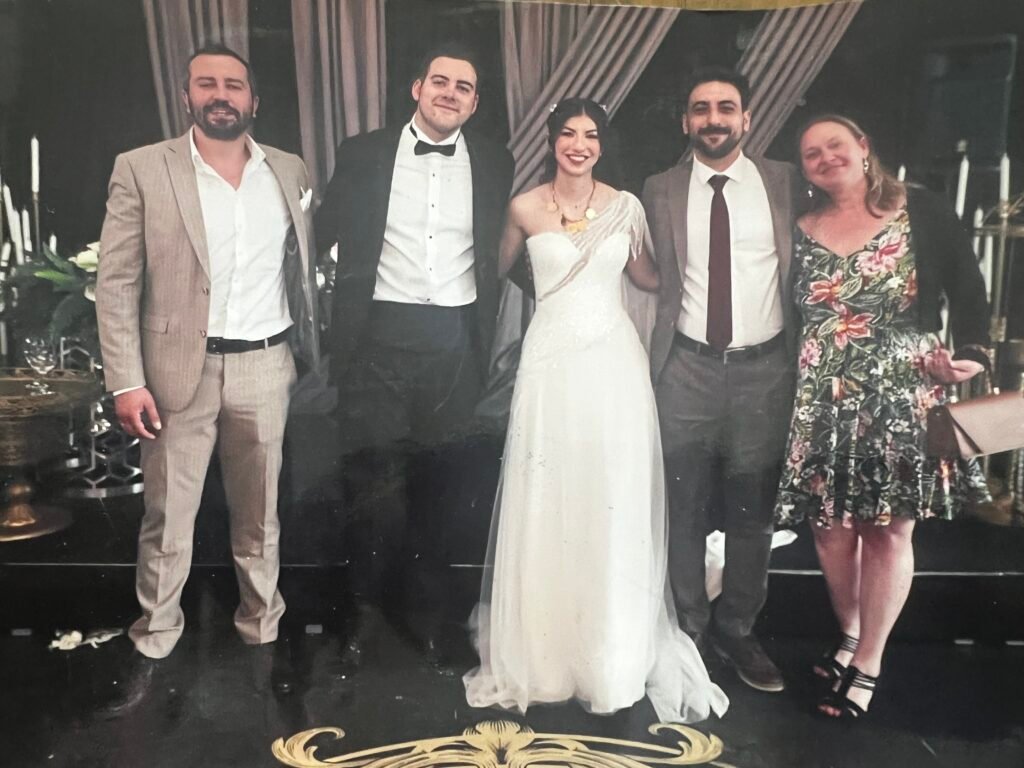
The wedding ceremony was a beautiful blur of traditions I’m still learning to understand. Hüma looked radiant as she married Mert in a ceremony that felt both familiar and wonderfully foreign. I found myself smiling so much my cheeks hurt, even though I understood maybe 10% of what was being said. The universal language of joy needs no translation.
The ceremony itself was beautifully brief, followed by the traditional receiving line where Hüma and Mert graciously greeted each guest with warm embraces and thank-yous. I watched as guests stood in line to present the newlyweds with traditional gifts of money and gold, including a beautiful gold coin necklace that was given to Hüma—a symbol of prosperity and good fortune for the couple’s new life together. The weight and significance of these gestures were clear in the careful way each gift was presented.
Standing to the side so I could witness the proceedings unfold without getting in the way, I reflected on how incredibly fortunate I was to have been included in such a momentous and intimate celebration. The warmth with which Hazar’s family had welcomed me, a foreign friend they’d only met a couple of times before, spoke volumes about Turkish hospitality. I couldn’t help but feel deeply grateful to Hazar for including me in this special day.
Little did I know what would happen next.
As the formal celebration wound down, Hazar turned to me with that mischievous grin I’ve come to know well. “The night is just beginning,” he said. “Some of us are heading to a bar for drinks before the real celebration begins later. You are welcome to join us, if you’d like.”
Would I? Yes, please.
🍻 The After-Party Prelude
I soon found myself squeezed around a table at a nearby bar with Hazar, his cousins, and several friends. We clinked beer glasses and swapped stories over plates of mixed nuts and crispy patates kızartması (French fries). Despite my limited Turkish, there was something universal about this post-wedding decompression—the loosened ties, the kicked-off heels, and the collective exhale after formal festivities.
“Just wait,” one of Hazar’s cousins said with a wink. “The rakı table is where the real magic happens.”
Several hours and many laughs later, Hazar checked his phone and announced it was time. The bride and groom had finished their formal obligations and were ready for the next phase of celebration. We paid our tab and headed through the cool evening air to a local restaurant where the night’s main event awaited. I had never heard of a “rakı table” before, but I was so ready for this new experience.
🫒 The Rakı Table: Where the Real Celebration Begins
At the end of a long table in a bustling Turkish restaurant in Tunalı—one of Ankara’s most popular neighborhoods—I spotted Hüma and Mert at the table with their close friends and family who had arrived before us. The atmosphere buzzed with conversation and clinking glasses, but our table felt like its own little world. In this world, the newlyweds had transformed entirely from their formal wedding selves, having traded ceremony for something more relaxed, intimate, and genuinely Turkish.
As I settled in with the group, I had no idea I was about to experience one of my most memorable cultural moments yet.
For those unfamiliar (as I was until recently), rakı is an anise-flavored alcoholic drink often called “lion’s milk” because it turns cloudy white when mixed with water. The traditional setup is simple yet precise: a shot of rakı with an equal amount of water and an ice cube added, a glass of water for drinking after the shot, and sometimes a glass of şalgam (a tangy purple turnip juice I’d soon discover). But a rakı table is so much more than just drinking. It’s a social institution in Türkiye where people gather for what Turks call “rakı içmek,” which often means sharing secrets, heartfelt talks, and discussing life, love, and sorrow.
Despite being both a foreigner and a last-minute addition to the wedding, I was immediately welcomed into this intimate circle of family and friends. Small plates of mezze appeared and disappeared in the beautiful chaos of family-style sharing: olives, hummus, stuffed grape leaves, and countless other delicacies I couldn’t identify but was eager to try.
“Şerefe!” (Cheers!) they exclaimed, teaching me to clink glasses by looking directly into each other’s eyes. I was told that the eye contact was necessary due to a superstition that avoiding eye contact while toasting brings seven years of bad luck. So I did what I was told, as I was not going to risk it!
But as the night went on, I realized this tradition runs much deeper than superstition. In Turkish culture, direct eye contact during a toast symbolizes honesty, respect, and being fully present in the moment. The rakı sofrası is where emotional connections deepen, and that eye contact reinforces the bond between companions. It’s just another example of how Turkish people have found a way to incorporate mindfulness into common social exchanges. And this aligns perfectly with the approach to life I always try to embody – full presence, openness, and genuine connection with those around me.
😅 Lost in Translation, Found in Connection
My Turkish vocabulary is not the strongest, but that didn’t stop me from trying to listen intently and learn what I could. And, boy, I’m glad I did. At the rakı table, something magical happened. Between the universal language of laughter, all the conversations in Turkish around me, and my new friends’ patient attempts at translation, I felt myself fully part of the celebration. Even Hüma and Mert could tell how content I was just to be there listening, and taking the opportunity to learn what I could from my new friends. Mert reflected that the joy and love surrounding the celebration didn’t need any translation – the translation of both transcends any language barriers. 💕
As the hours passed and the rakı continued to flow, the conversations around our table grew deeper and more contemplative. “In Türkiye, we say rakı doesn’t get you drunk, it makes you philosophical,” one of the cousins explained with the earnestness that only comes after several glasses of lion’s milk. I nodded sagely in agreement, trying to project wisdom while secretly wondering if my attempt to keep pace with my Turkish companions was perhaps a bit too successful. I had to appreciate the timing of this philosophical insight being shared with someone who was clearly experiencing rakı’s effects firsthand. I had lost track of how many toasts I had participated in. Oops.
When in Türkiye, right?
🫶 Lessons from the Rakı Table
What struck me most about the rakı table wasn’t so much the food or drink, but the deeper lessons this tradition offered:
- The Power of Slow Living: In our scrolling-obsessed world, here was a tradition centered entirely around being present with others. No phones. No distractions. Just hours of conversation, laughter, occasional bursts of song, and the gradual building of genuine connections.
- Location Doesn’t Matter, Intention Does: As Hazar explained later, a rakı table doesn’t require a fancy restaurant setting. “You can have a rakı table anywhere,” he told me. “In someone’s apartment, on a rooftop, even in a park. All you need is rakı, some mezze plates, and people who want to enjoy each other’s company.”
- Sometimes the Best Discoveries Are Unexpected: I discovered şalgam, a tangy turnip juice that some people drink alongside their rakı. The purple liquid looked intimidating, but its salty, slightly sour flavor provided an interesting counterpoint to the anise notes of the rakı. I have to admit, I loved the combination.
- Language Learning Happens Naturally in Context: As the night progressed, I found myself recognizing more and more Turkish words floating through the conversations around me, each one like discovering a small treasure. Words like “eğlence” (fun), “kahkaha” (laughter), and “sarhoş” (drunk) seemed to punctuate every story and joke being shared around our table.
By the time we parted ways well after midnight, I had gained so much more than I could have imagined: new friendships, an invitation to visit one of the cousins in Istanbul, phone numbers saved with promises to meet again, and most importantly, that warm glow that comes from being welcomed not as a tourist or foreigner, but as a genuine friend. 🥰
🏡 Finding Home in New Traditions
As I reflected in the taxi heading back to my apartment, slightly wobbly from rakı and lack of sleep, I realized that this is what living abroad is really about. Not just visiting the tourist sites or learning the language, but being invited into the intimate, everyday traditions that make up the real fabric of a culture.
My first rakı table showed me that while I may be far from my American home, I’m slowly creating a new home here in Türkiye – one mezze plate, one new Turkish word, and one last-minute invitation at a time.
Şerefe to new friends and unexpected adventures!
Wishing you open hearts that embrace new traditions, curious spirits ready for unexpected invitations, and the grace to remember that the best connections happen when we’re brave enough to say “yes” to the unknown,
With love from Ankara, Tiffles, Stormy, and Smokey 🐾


Beautiful. You capture the Turkish experience so well. Thank you for sharing!