
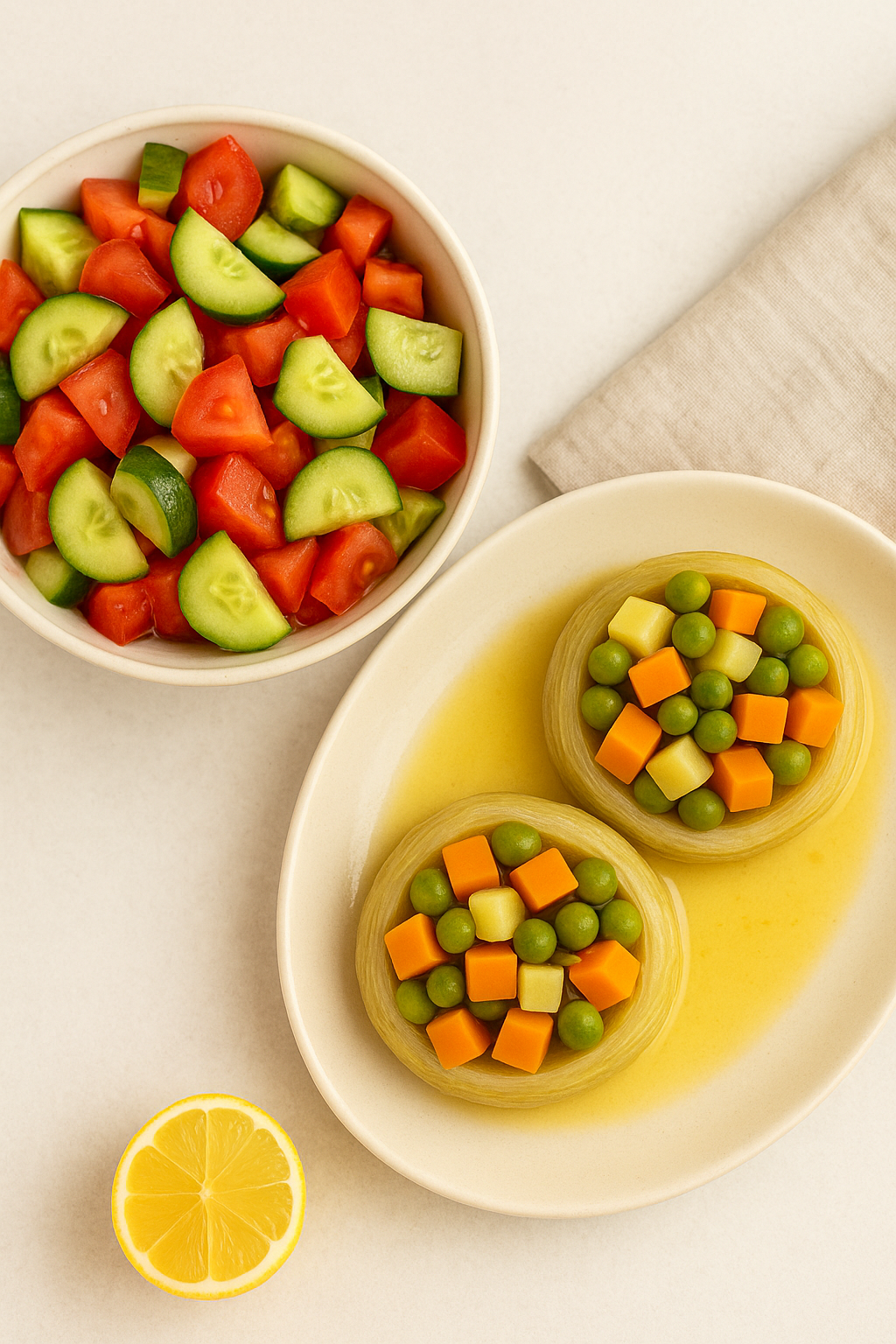

Çoban Salatası & Zeytinyağlı Enginar: Fresh Flavors for Hot Days
Merhabalar Arkadaşlarım! (Hello, My Friends!)
First, I owe you all a big apology for the three-week (and one-day) delay on this final installment. Life decided to throw me a curveball with my third move in less than two years (yes, you read that right – apparently I’m collecting Ankara neighborhoods like some people collect stamps). Just when I thought I had settled in, I got hit with a nasty bout of sickness that knocked me out for longer than I care to admit. But I’m back, slightly more scattered but determined to finish what we started!
Can you believe we’ve reached the finale of our Summer Meze Magic series? It feels like just yesterday I was butchering the spelling of “meze” and now here we are, seven weeks later, with a collection of Turkish meze recipes that could make any dinner party legendary. From the classic hummus and baba ganoush that started our journey, to the spicy ezme and dolma that brought the heat, to last post’s muhammara and ciğ köfte that showed us the art of patience in Turkish cooking – we’ve covered some serious meze ground!
For our grand finale, I’m sharing two of my favorite recipes that have brought me endless joy, when the Ankara heat makes cooking feel like a punishment, or when I just want something that tastes like summer in a bowl. Today we’re making the world’s most refreshing çoban salatası and zeytinyağlı enginar – artichokes so tender and flavorful, they’ll make you understand why Turkish people are obsessed with anything “zeytinyağlı” (cooked in olive oil).
Why These Two Are My Turkish Kitchen MVPs
Living in Turkey has taught me that sometimes the simplest dishes are the most magical. The çoban salatası is proof that you don’t need 47 ingredients to create something that makes your taste buds do a little happy dance. And zeytinyağlı enginar? Well, it’s basically edible meditation – slow-cooked artichokes that require patience but reward you with flavors that are worth every minute of waiting. (Or you can take the shortcut by buying the artichoke bottoms in a can if you’re in a rush.)
These dishes embody everything I love about Turkish summer cooking: fresh, simple, cooling, and perfect for sharing. Plus, they’re both naturally vegan, which means more time enjoying good food and less time explaining why I don’t eat meat to well-meaning Turkish aunties.
The Ultimate Çoban Salatası: Summer’s Best Friend
Prep Time: 15 minutes | Serves: 4-6 | Difficulty: So easy, you could make it during a Turkish lesson break
This isn’t just any cucumber-tomato salad – this is Çoban Salatası (pronounced “cho-BAHN sah-lah-tah-SUH”), which means “Shepherd’s Salad” in Turkish. Legend has it that Turkish shepherds would eat this simple combination along with bread as their daily meal, and villagers would pay the shepherds with the fresh produce they grew. While it only became popular in Turkish cuisine in the 1950s, it’s now perhaps the most beloved side salad across the country. It was served at one of my first breakfasts with neighbors here in Ankara, and the pure simplicity made a huge impact on me. With just four basic ingredients, this dish embodies the Turkish philosophy that quality ingredients don’t need much fussing. It’s incredibly versatile – the beauty is in adapting it to your mood and what you have on hand.
Ingredients:
- 4 large cucumbers (sliced, diced, or cut into half-moons – your choice!)
- 4 large ripe tomatoes (roughly chopped if large and juicy, or use cherry tomatoes halved or sliced)
- 3 tablespoons good quality olive oil
- Salt to taste
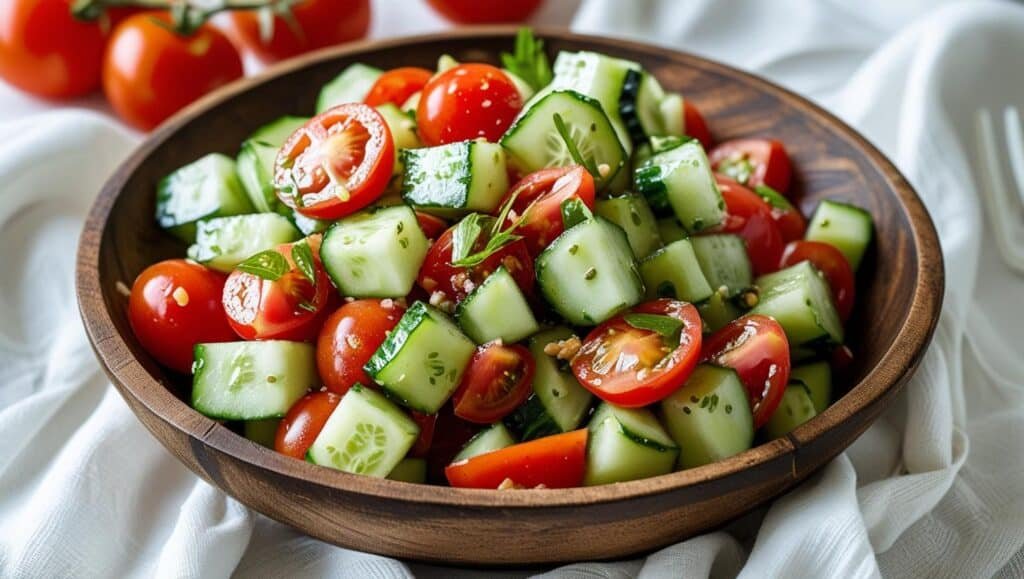
Optional flavor boosters:
- Fresh lemon juice (squeeze over just before serving)
- Fresh herbs like parsley, dill, or mint
- Thinly sliced red onion
- A pinch of sumac for that Turkish touch
Instructions:
- Cut to your heart’s content: Prepare your cucumbers and tomatoes however feels right today – diced, sliced, half-moons for cucumbers, roughly chopped large tomatoes, or halved cherry tomatoes. The versatility is part of the charm.
- Dress it up: Drizzle the olive oil over the vegetables and add salt to taste. Toss gently to combine.
- Let it shine: The vegetables will release their natural juices and create a light, refreshing dressing with the olive oil. Let it sit for 10-15 minutes if you have time.
- Finish with flavor: Just before serving, squeeze fresh lemon juice over the top if desired. Add any of the optional herbs or seasonings to make it your own.
The beauty of this recipe: It’s endlessly adaptable and forgiving. Sometimes I add herbs when I’m feeling fancy, sometimes just a squeeze of lemon, and sometimes I eat it exactly as is – four perfect ingredients doing what they do best.
Pro tip: This salad is perfect for those “I have nothing in my fridge” moments when you realize you actually have everything you need. It keeps well for a day or two and makes an excellent side dish for any meal. The simplicity is the point – let those beautiful summer vegetables shine!
Zeytinyağlı Enginar: Artichoke “Nests” With a Tasty Filling
Prep Time: 30 minutes | Cook Time: 45 minutes | Serves: 4-6 | Difficulty: Medium (but so worth the effort)
Before moving to Turkey, I always loved when my mother would steam artichokes and we’d dip the leaves in either mayo or butter (these were my pre-vegan days). I also enjoyed spinach artichoke dip and sometimes even had artichoke hearts on pizza. But I never fully appreciated the artichoke until I moved here. I remember when I first tried zeytinyağlı enginar at the METU canteen during my early days in Ankara – these tender artichokes braised in olive oil became an instant favorite. They totally look like little bird nests when served, which makes them even more charming. This dish taught me that artichokes are actually these incredible, meaty vegetables that become silky and luxurious when braised slowly in olive oil. This dish is served at room temperature, making it perfect for summer entertaining or when you want to feel fancy on a Tuesday.
Ingredients:
- 6 large fresh artichokes (or 1 can of artichoke bottoms if fresh isn’t available)
- 1 large lemon (for prep water and juice)
- 1/2 cup olive oil (don’t skimp here!)
- 1 large onion, chopped
- 4 carrots, cut into thick rounds
- 6-8 small potatoes, halved
- 1 cup fresh or frozen peas
- 4 cloves garlic, minced
- 1/4 cup fresh dill, chopped
- 2 tablespoons fresh parsley, chopped
- 1 teaspoon sugar
- Salt and black pepper to taste
- 1 cup water
- Extra lemon juice for serving
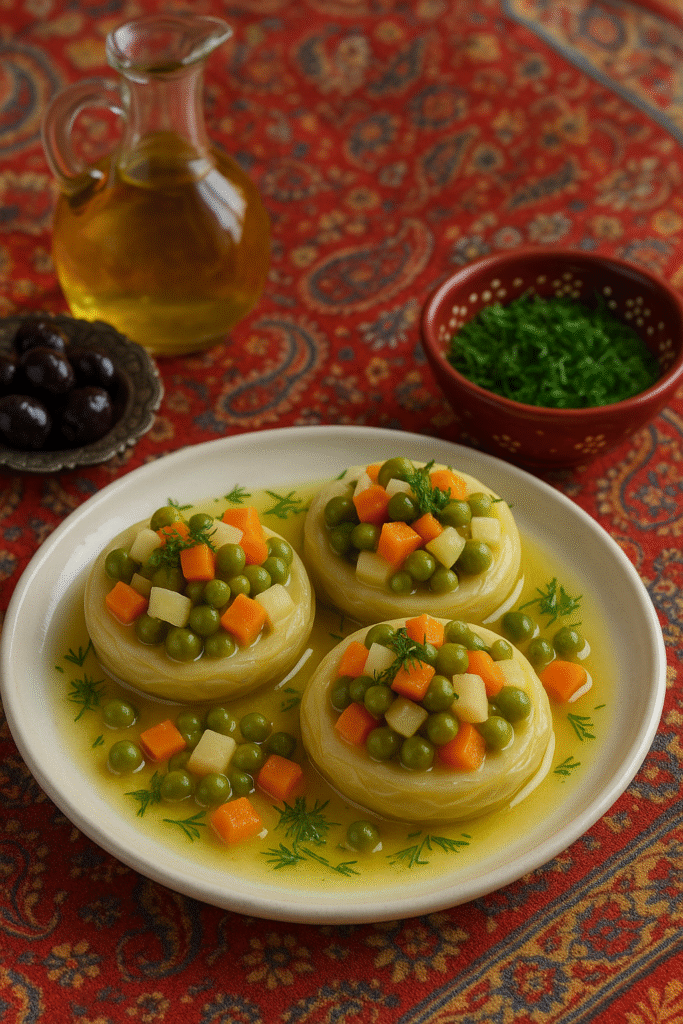
Instructions:
- Artichoke prep (the meditative part): If using fresh artichokes, fill a large bowl with water and add lemon juice. Remove tough outer leaves from artichokes, trim stems, and cut off the top third. Remove the fuzzy choke with a spoon. Place prepared artichokes in lemon water immediately to prevent browning. (If using canned artichoke bottoms, just drain and rinse before proceeding.)
- Build the flavor base: Heat olive oil in a large, heavy-bottomed pot over medium heat. Add onions and cook until softened, about 5 minutes. Add carrots and potatoes, cooking for another 5 minutes.
- Artichokes join the party: Drain artichokes and add them to the pot along with garlic. Season with salt, pepper, and sugar.
- The slow magic: Add water, bring to a gentle boil, then reduce heat to low. Cover and simmer for 35-45 minutes until artichokes are tender and can be easily pierced with a fork.
- Add the peas: Stir in the peas and continue cooking for another 10-15 minutes until peas are tender and artichokes can be easily pierced with a fork.
- Fresh finish: Stir in fresh dill and parsley during the last 5 minutes of cooking.
- Cool and serve: Let cool to room temperature before serving. Drizzle with extra lemon juice and olive oil if desired.
Turkish wisdom: This dish is traditionally served at room temperature or slightly cool, never hot. It’s perfect for making ahead and gets more delicious as the flavors develop.
Expat Reflections: Four (Okay, Plus Three) Weeks of Meze Memories
As I sit here writing this final post in the series, looking out at the Ankara skyline with the call to prayer echoing across the city, I’m struck by how much these past weeks have taught me – not just about Turkish cuisine, but about the art of taking time with food.
Each of these meze dishes requires patience in different ways. The muhammara needs time for flavors to meld, the ciğ köfte demands that therapeutic kneading, the çoban salatsı benefits from sitting and marinating, and the zeytinyağlı enginar rewards you for slow, gentle cooking. It’s a beautiful metaphor for expat life, really – the best experiences come when you slow down, pay attention, and let things develop naturally.
Summer Meze Magic Mastery Achieved
With this Meze Magic recipe series, you now have a complete arsenal for any summer gathering, potluck, or “what should I make for dinner?” moment. From quick and easy (hello, çoban salatası!) to “I’m feeling fancy today” (zeytinyağlı enginar, I’m looking at you), these dishes will serve you well whether you’re hosting fellow expats, impressing Turkish friends, or just treating yourself to authentic flavors.
The complete summer meze experience: Start with classic hummus and baba ganoush as your foundation, add muhammara and ciğ köfte for substance, add the spicy ezme and dolma for variety, refresh your palate with the çoban salatası, and finish with the elegant zeytinyağlı enginar. Your table will look like something from a Turkish cooking magazine, and your guests will think you’ve been secretly attending cooking classes in Gaziantep.
What’s your favorite from the series? I’d love to hear which recipes you’ve tried and how they turned out. Did the ciğ köfte kneading become your meditation practice too? Did you fall in love with sumac? Drop a comment and let me know!
As we enjoy the peak of summer, I’m already planning new series to help us navigate the seasons ahead while embracing this beautiful Turkish culinary culture. Because if these last weeks of meze magic have taught me anything, it’s that good food makes every adventure better – even the everyday adventures of expat life.
The Complete Meatless Monday: Summer Meze Magic Series
Week 1: Classic Hummus & Baba Ganoush – Your Gateway to Turkish Meze Glory
Week 2: Spicy Ezme & Dolma – When Heat Meets Herby Perfection
Week 3: Muhammara & Ciğ Köfte – Turkish Traditions Meet Plant-Based Perfection
Week 4: Çoban Salatası & Zeytinyağlı Enginar – Fresh Flavors for Hot Days
Wishing you delicious discoveries, wonderful friends to share them with, and flavors that transport you to sunny afternoons wherever you are,
With love from beautiful Ankara, Tiffles, Stormy, and Smokey 🐾



0 Comments