
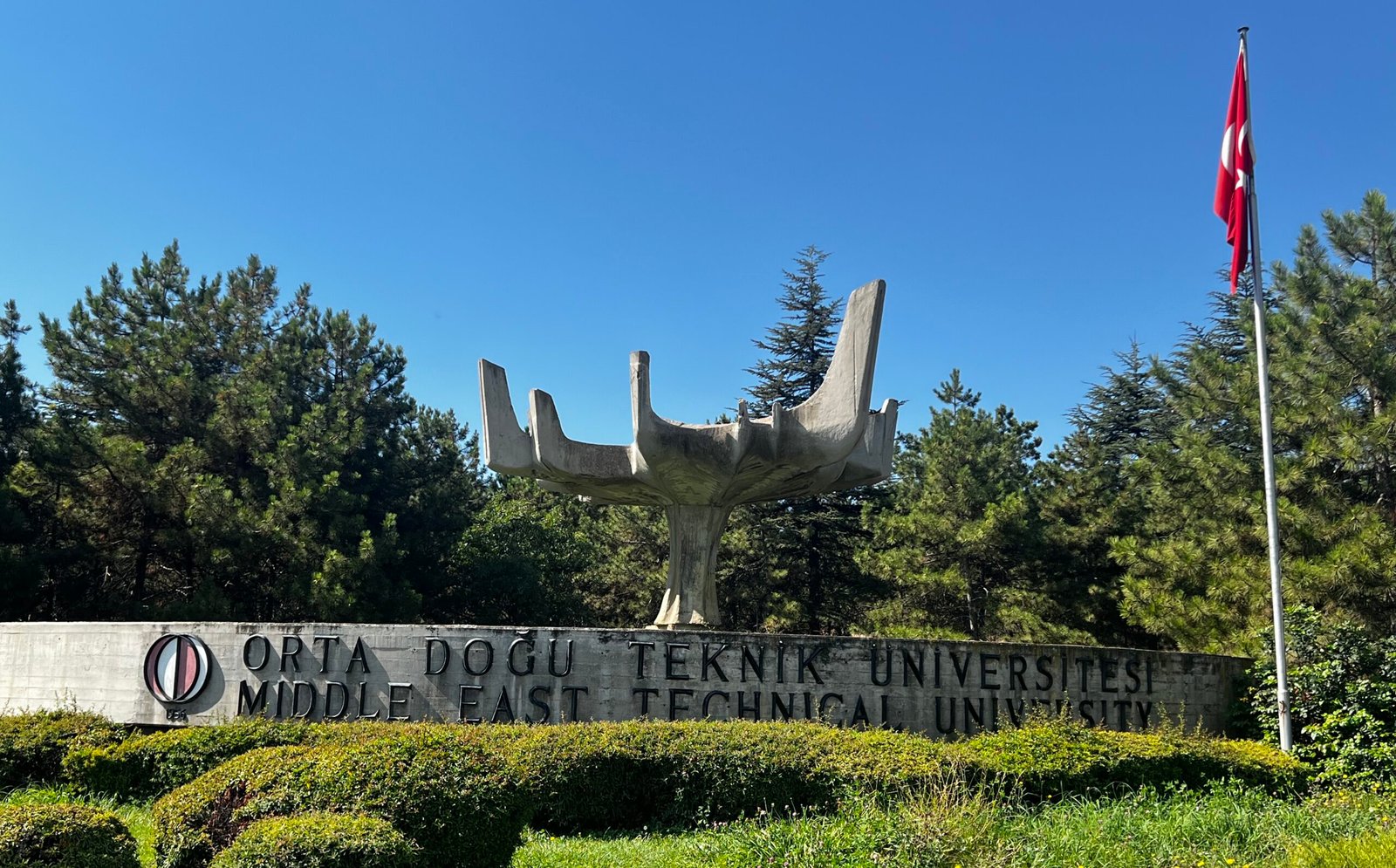

You know that moment when you learn a new word in a foreign language and suddenly start hearing it EVERYWHERE? That was me with “hocam” during my first week at Middle East Technical University (ODTÜ/METU).
One minute I was awkwardly mumbling “merhaba” to strangers; the next, students were tossing out “hocam” left and right—to professors, to each other, to the barista in the canteen, and yes, at one point, I’m pretty sure someone addressed one of the campus cats as “hocam.” Honestly? Respect.
So what is this magical word? A formal title? A term of endearment? A secret handshake to Türkiye’s most exclusive intellectual club?
The answer is yes. And then some.
The Magic of “Hocam”
“Hocam” (pronounced ho-jum) literally translates to “my teacher,” but its usage extends far beyond the classroom walls. It’s one of those beautiful linguistic gems that manages to convey respect, familiarity, and cultural context all in two simple syllables.
In Türkiye, “hocam” is used to address:
- Actual teachers and professors (its original meaning)
- Doctors and medical professionals
- Anyone sharing knowledge or expertise
- Sometimes, just about anyone you want to show respect to
Think of it as the Turkish mashup of “sir,” “ma’am,” “coach,” and “wise Yoda figure”—but with heart. Like saying, “I see the value in what you offer.” A kind of warm, humble bow in word form.
My Turkish language teacher (yes, my actual hocam) explained that it evolved from the Arabic word khawja, meaning “scholar” or “master.” Over the centuries, it morphed into this friendly, respectful, inclusive address. As she said, “The beautiful thing about hocam is it acknowledges that the other person has something to teach—even if they’re not standing at a podium.”
As someone who believes we can learn something from every person we meet (yes, even that guy who mansplained meditation to me at a party once), I fell in love with this concept immediately.
A History Lesson on Foot: Walking with Hazar
My deeper understanding of “hocam” and its connection to ODTÜ’s revolutionary history came during an impromptu campus tour with my friend Hazar. It was one of those perfect autumn afternoons when the campus trees were showing off their most dramatic colors, and he had some time to show me campus highlights I hadn’t seen before. Hazar is like a walking encyclopedia of historical knowledge, and I was in for a treat.
“Do you know about Sinan Cemgil?” Hazar asked as we passed an unassuming building near the central campus.
I admitted I didn’t, expecting perhaps a quick anecdote about a famous professor or university founder.
Instead, I received a masterclass in Turkish revolutionary history that would fundamentally change how I viewed my temporary academic home.
The Revolutionary Spirit of ODTÜ
Sinan Cemgil, Hazar explained, was a student revolutionary leader at ODTÜ in the late 1960s who later became a prominent figure in Türkiye’s leftist movement. The son of a famous Turkish poet, Cemgil was known for his brilliance, charisma, and unwavering commitment to social justice.
“ODTÜ wasn’t just any university in the 60s and 70s,” Hazar said, his pace slowing as he grew more animated. “It was the epicenter of leftist student movements in Türkiye. The campus you’re walking on right now was once the intellectual headquarters of a generation fighting for workers’ rights, economic equality, and political freedom.”
As we strolled through the tree-lined paths, Hazar painted a vivid picture of ODTÜ during that turbulent era: students distributing underground newspapers, holding clandestine meetings in dorm rooms, organizing massive protests that would sometimes end in confrontations with authorities.
“In 1969, students here protested the arrival of the U.S. ambassador by burning his car,” Hazar mentioned casually, as if telling me about yesterday’s lunch menu. I nearly tripped over my own feet.
“They did WHAT?”
Hazar grinned. “ODTÜ students have never been the quiet type. The university was founded with American support during the Cold War, but many students opposed U.S. imperialism and Türkiye’s alignment with Western powers. When Ambassador Robert Komer visited—he had been involved in controversial operations in Vietnam—students saw it as the perfect opportunity to make their feelings known.”
The protest became legendary in Turkish political history, and even though it led to the university’s closure for a month following the incident, it solidified ODTÜ’s reputation as a hotbed of revolutionary thinking.
Sinan Cemgil: The Teacher Who Never Taught a Class
As we continued our walk, Hazar explained that Cemgil’s story took a tragic turn. In 1971, at just 27 years old, he was killed in a clash with government forces in Nurhak Mountains while leading a revolutionary group.
“He became a martyr for the cause,” Hazar said quietly. “For many progressive Turks, especially here at ODTÜ, Cemgil represents the idealism and sacrifice of that generation.”
What struck me most was how Hazar referred to him throughout our conversation—”Sinan Hocam.” He was calling someone he had never met, who had died years before either of us was born, “my teacher.”
When I asked about this, Hazar’s answer revealed the deeper meaning of “hocam” I’d been missing.
“What many don’t know is that Sinan was actually one of the first to popularize ‘hocam’ as we use it today on campus,” Hazar explained, his eyes lighting up. “He was such an inspiring and respected revolutionary leader that students naturally began calling him ‘Sinan Hocam’ out of admiration.”
“But here’s where it gets interesting,” Hazar continued, lowering his voice as if sharing a secret. “Cemgil believed deeply in equality. He was uncomfortable with being elevated above others in the movement. So, in a brilliant move of solidarity, he began addressing everyone else as ‘hocam’ too.”
Hazar smiled. “Imagine that—a revolutionary leader insisting that the canteen worker, the janitor, and the freshman student all deserved the same respect as the most distinguished professor. It caught on like wildfire across campus.”
“Sometimes the most important teachers are those whose lessons come to us through their actions and sacrifices, not their words in a classroom,” he said. “Cemgil and the other revolutionaries taught generations of ODTÜ students about courage, conviction, and fighting for what you believe in. They are ‘hocam’ in the truest sense.”
“So when you hear students casually calling each other ‘hocam’ today,” Hazar concluded as we walked, “you’re actually hearing the echo of a radical idea—that we all have something to teach, that we all deserve respect, regardless of title or position. It’s a little piece of revolution that survived in our everyday language.”
I stood there, processing this revelation. The word I’d been hearing dozens of times daily wasn’t just a quirky linguistic custom—it was a living artifact of ODTÜ’s revolutionary spirit. Suddenly, every “hocam” I’d heard took on new meaning.
The Stadium that Stands as Witness
Our campus walk eventually led us to ODTÜ Stadium, a structure I’d passed countless times without giving much thought to its history.
“This isn’t just a place for sports,” Hazar said as we stood looking at the concrete stands. “During the 60s and 70s, this stadium hosted some of the largest student gatherings in Turkish history.”
The stadium, built in 1965, has witnessed everything from ordinary football matches to extraordinary moments of political activism. In its concrete confines, thousands of students once gathered to debate politics, organize movements, and occasionally hide from police during periods of campus unrest.
“In 1968, when student movements were erupting worldwide, this stadium was packed with ODTÜ students voting on whether to occupy university buildings,” Hazar told me. “Can you imagine? The administration must have been watching from their windows, counting the raised hands, knowing exactly what was coming.”
Today, the stadium hosts considerably fewer revolutionary activities—mostly intramural sports and the occasional concert. It’s even a top hangout spot for students when the weather is nice. But the echoes of its past remain in the university’s enduring spirit of activism and critical thinking.
The Hocam Mindset
Later that night, back in my apartment (with Smokey and Stormy both curled up in protest that I’d been gone too long), I reflected on what I’d learned.
ODTÜ isn’t just an institution of higher learning; it’s a living museum of intellectual resistance and progressive thinking. Each time I say ‘hocam’ now, I’m not just using a Turkish word—I’m carrying forward a powerful tradition of knowledge-sharing and equality that brave students like Cemgil championed, sometimes at the ultimate cost. It’s humbling to think a simple word can hold so much revolutionary spirit (and honestly, makes me feel a little cooler every time I use it).
Even the campus itself—from its modernist architecture to its sprawling forests—was shaped by ideological battles as much as architectural plans.
When I call someone “hocam,” I’m not just saying “professor.” I’m saying, I recognize you. I value you. I believe I have something to learn from you.
In my mindfulness practice, I try to approach each day with curiosity rather than certainty. The Turkish concept of hocam fits beautifully into that frame: everyone is a teacher, and we’re all students.
Capturing the Spirit of Hocam
Whether you’re:
• Learning a new language,
• Adjusting to a new culture,
• Or just trying to understand someone else’s way of thinking…
Take a cue from Türkiye’s favorite word of mutual respect: hocam.
It’s not just for professors—it’s for the barista, the bus driver, the friend, the stranger.
It’s a gentle nod that says: “We’re all learning from each other.”
So:
🔹 Be open—everyone has something to teach.
🔹 Be humble—titles don’t define wisdom.
🔹 Be curious—less “know-it-all,” more “teach-me-something-new.”
And if you find yourself at ODTÜ, slow down. The buildings have history. The trees have patience. And the cats? Well, they think you need a lesson in relaxation.
Just… maybe leave the ambassador’s car alone, okay? 🚗🔥😅
Wishing you open hearts, curious minds, and the wisdom to see a teacher in every soul you meet.
With love from Ankara,
Tiffles, Stormy, and Smokey 🐾
Have you encountered words in other languages that capture concepts we can’t quite express in English? Or have you discovered unexpected history in places you thought you knew? Share your experiences in the comments!



0 Comments