
Some places are worth returning to again and again.
Cappadocia is one of them. On this trip, that meant hiking through a canyon, staying out until midnight for Turkish Night, starting the next morning at a wine shop, climbing approximately seventeen billion stairs, riding an ATV, and taking hundreds of photos before heading home.
Or maybe that’s just how I travel.
I first visited Cappadocia in 2022 with my mom during the trip that eventually changed the direction of my life and brought me to Türkiye. I’ve returned to the region since then, but this trip felt completely different. Almost exactly four years after that first visit, I was back for a quick weekend in Cappadocia—this time with a group of friends from Toastmasters and seeing Cappadocia from an entirely different place in my life.
One of our Toastmasters members, Musa, led the tour. Musa has been a good friend to me for the past couple of years, so there was something especially nice about exploring one of Türkiye’s most extraordinary regions with someone I already knew and trusted at the front of the group. Görkem, another Toastmasters friend, and Musa organized the trip, and Ankara Gezi Travel helped make our very full—and I mean very full—weekend happen.
And Cappadocia gave us plenty to explore.
First, Cappadocia Is Much Bigger Than You Think
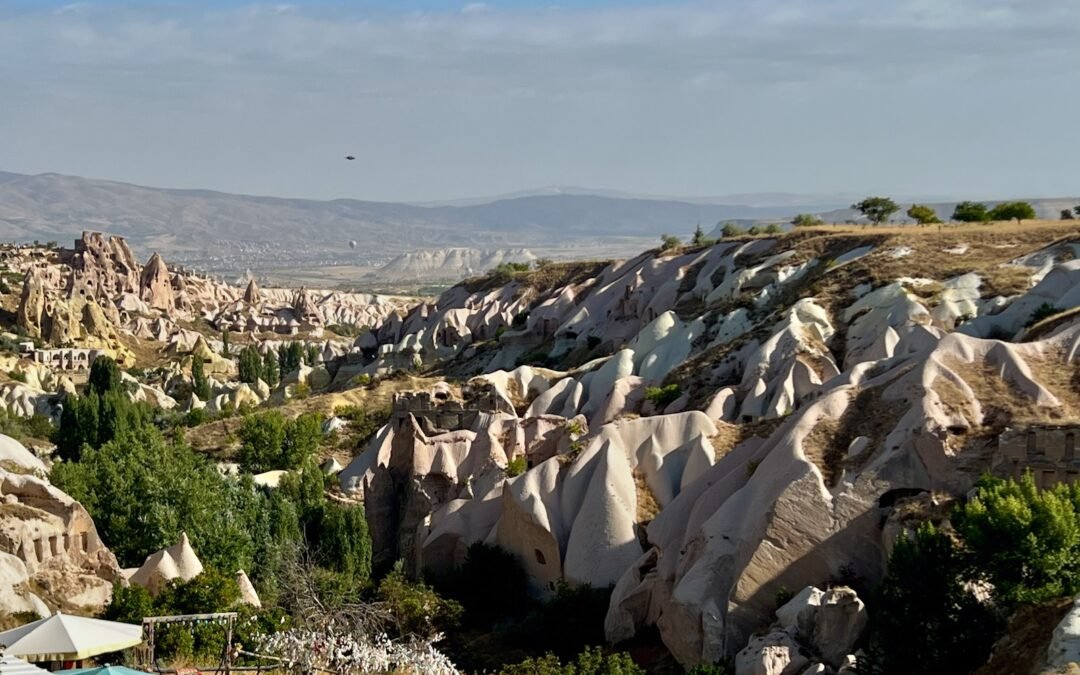
When most people picture Cappadocia, they probably imagine fairy chimneys, colorful hot-air balloons, and maybe one charming cave hotel tucked into Göreme.
Cappadocia is much, much bigger than that.
The historic region stretches across a large part of central Anatolia. Millions of years of volcanic activity, followed by wind and water erosion, created the valleys, pillars, cones, and fairy chimneys that make the landscape look like someone accidentally left the fantasy setting switched on.
Over centuries, people carved homes, churches, monasteries, storage rooms, pigeon houses, and entire underground settlements directly into the soft volcanic rock.
The result isn’t simply one tourist destination. It is an enormous cultural landscape filled with thousands of years of human history.
Which also explains why trying to see Cappadocia in two days is a little like saying, “I’ll just pop into the Louvre for fifteen minutes.”
We tried anyway.
Day One: Ankara to Cappadocia
We left Ankara early on October 3 with an ambitious itinerary and the kind of optimism people have before they realize exactly how much walking they’re about to do.
Our first stop was somewhere I had visited before but am always happy to see again.
Tuz Gölü
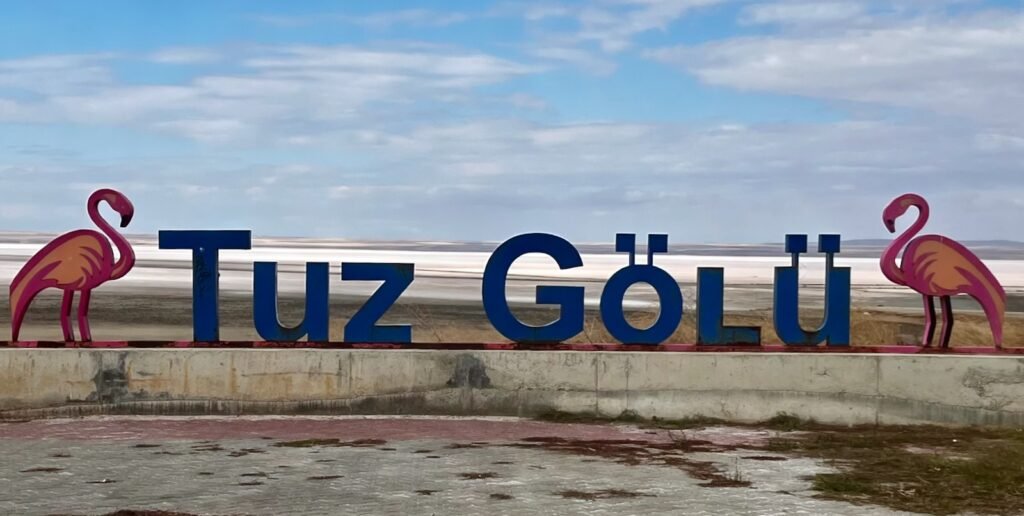
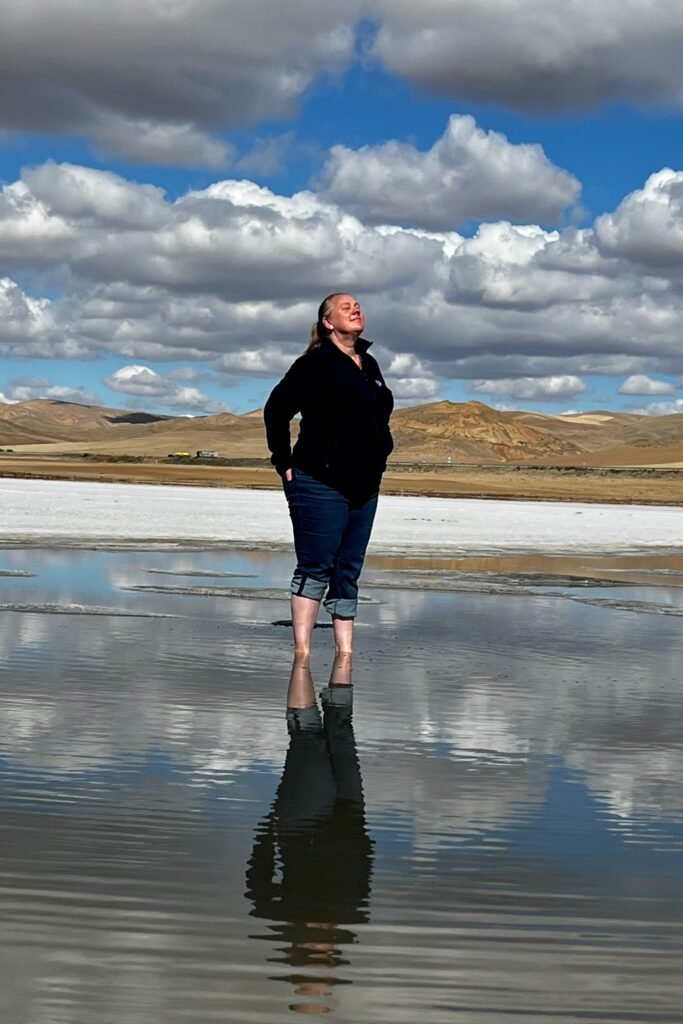
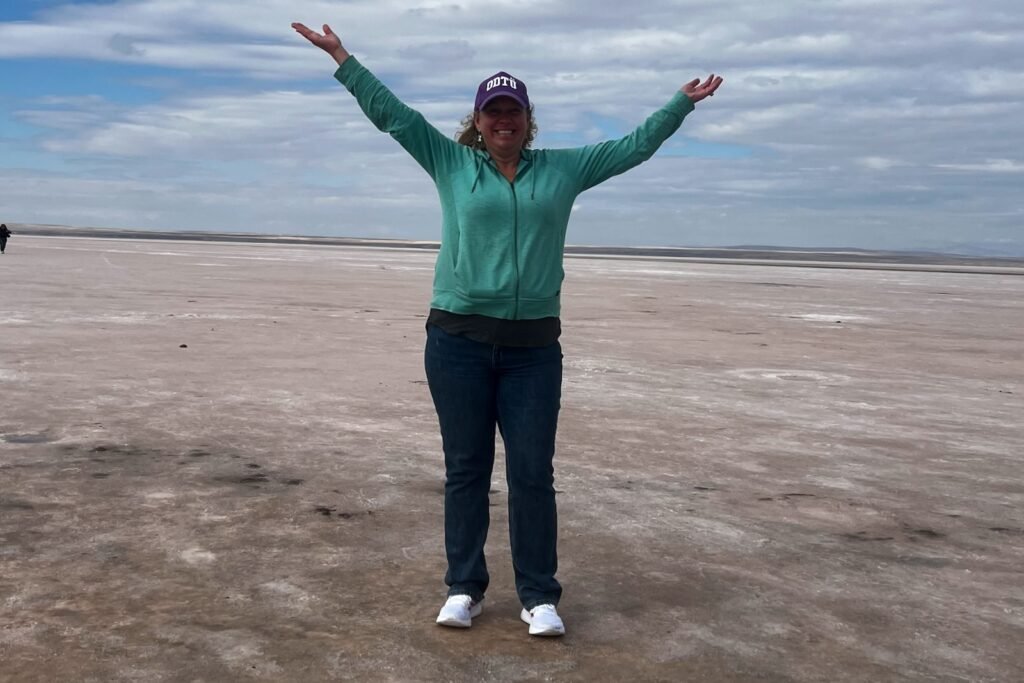
Tuz Gölü—literally “Salt Lake”—sits in central Anatolia between Ankara, Aksaray, and Konya. It is Türkiye’s second-largest lake and one of the country’s most unusual landscapes. The lake is extremely shallow and salty, and during the warmer months much of the water evaporates, leaving a brilliant white layer of salt across the surface.
People have also harvested salt in this region for thousands of years, making Tuz Gölü both a striking natural landscape and an important economic resource.
It is one of those places where the scenery almost tricks your eyes. Depending on the season and weather, it can look like water, snow, glass, or another planet entirely.
Not a bad way to begin a road trip.
Saratlı Underground City
Next came Saratlı Underground City.
I sat this one out.
Before anyone accuses me of lacking an adventurous spirit, I would like to present Exhibit A: I willingly moved across the world to a country where I didn’t speak the language.
However, underground tunnels?
We all have limits.
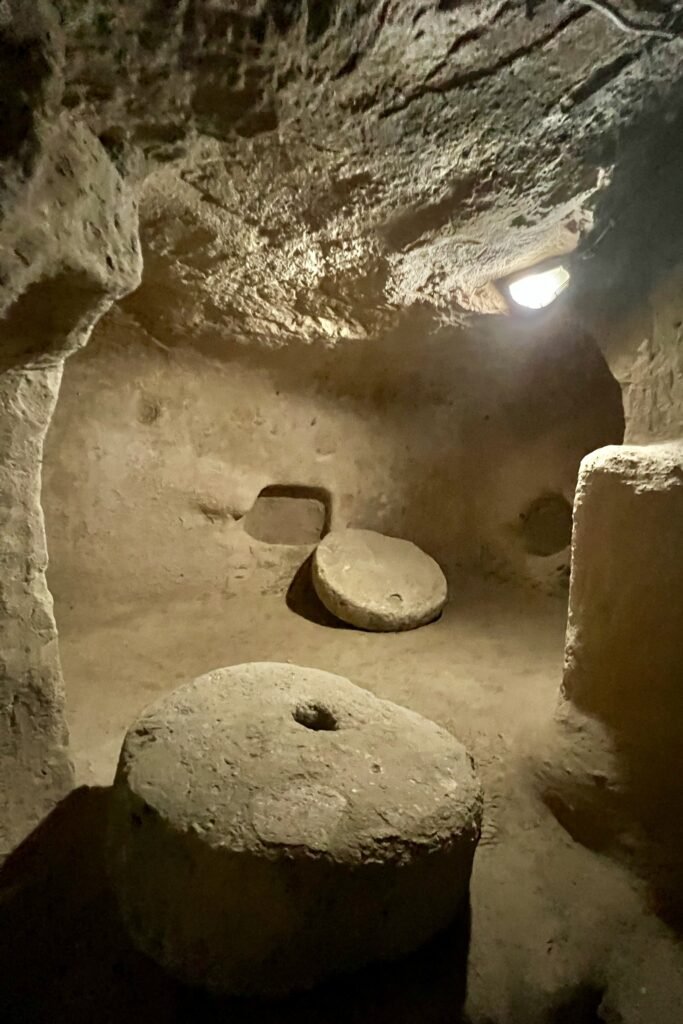
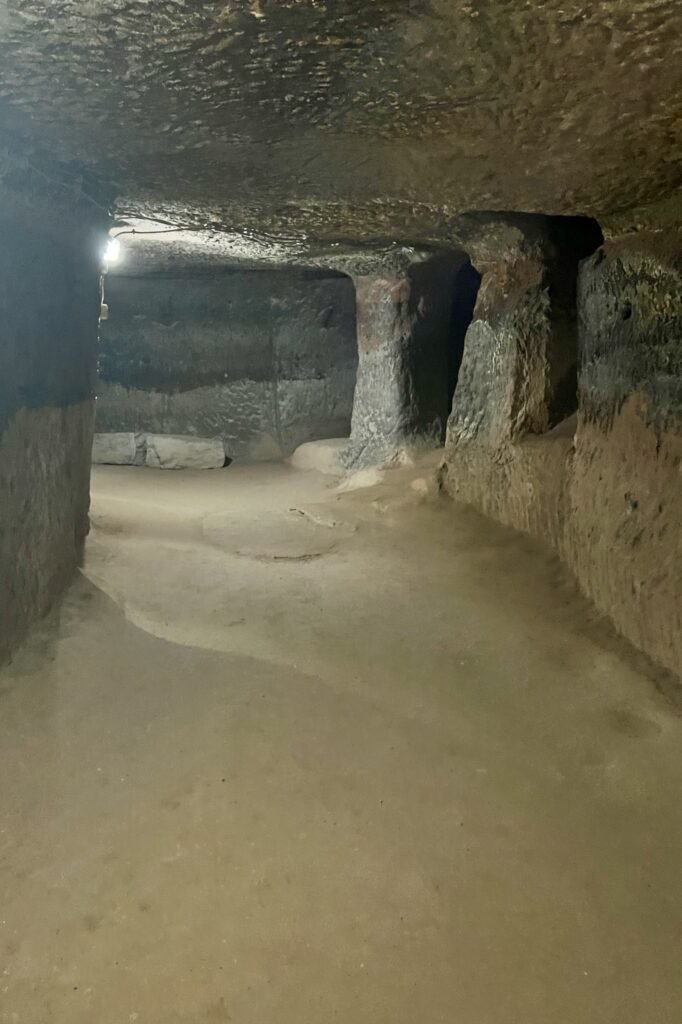
I’m a little claustrophobic, and because I had already visited Saratlı during my 2022 trip with my mom, I decided one subterranean adventure per lifetime was perfectly respectable. I am sharing some photos from that visit instead.
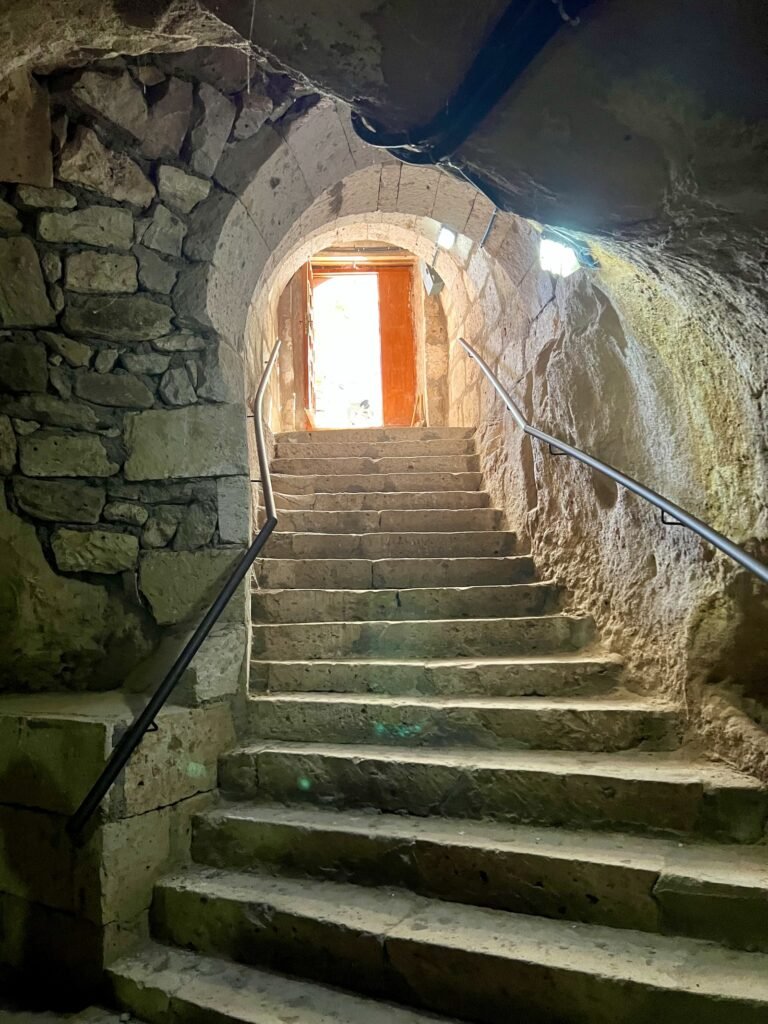
Saratlı Kırkgöz Underground City dates largely to the Byzantine period and includes several excavated levels with living spaces, storage rooms, kitchens, wells, and narrow connecting passages. Like other underground settlements in Cappadocia, it provided protection during periods of conflict.
It is fascinating.
It is ingenious.
It is underground.
I was very happy waiting above ground.
Ihlara Valley: The Place That Stole the Weekend
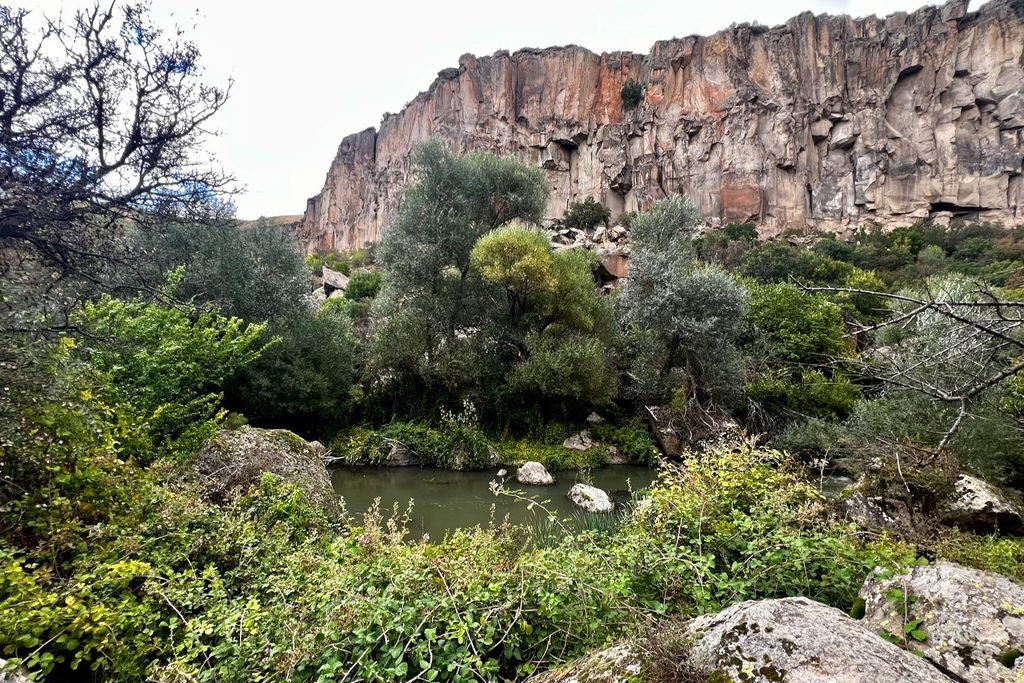
Then we reached Ihlara Valley.
And this was it.
My favorite part of the entire trip.
Not the fairy chimneys. Not the balloons. Not the wine. Not even the evening involving traditional dancing and an enthusiastic amount of rakı.
Ihlara.
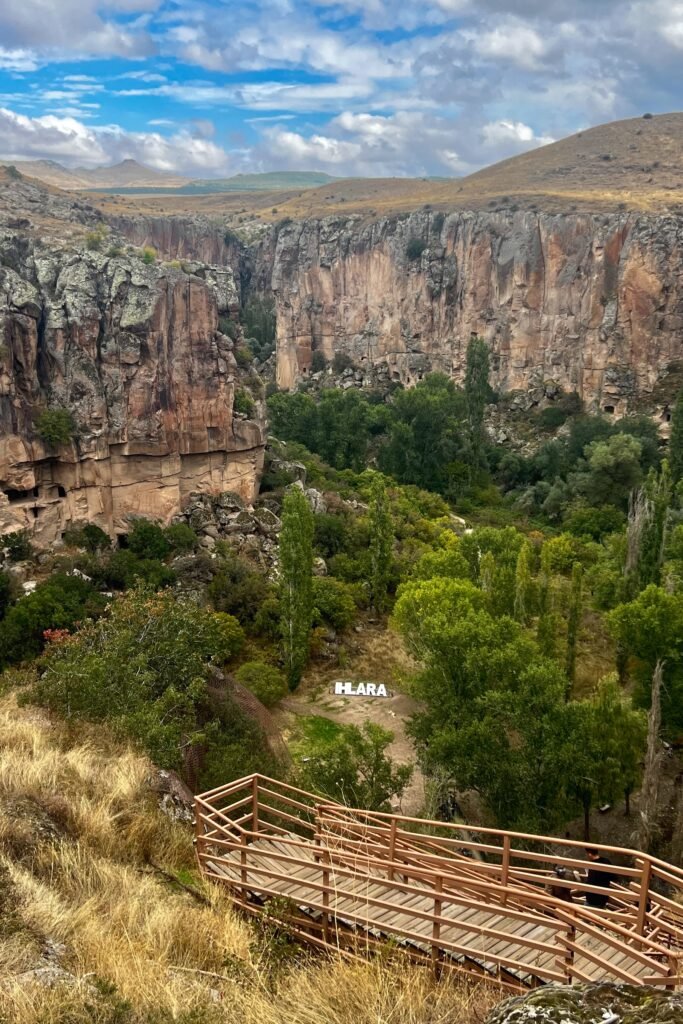
The full valley stretches for roughly 14 kilometers and was carved through volcanic rock by the Melendiz River. Its sheltered cliffs became an important center of Christian monastic life, particularly during the Byzantine period, and people carved churches, monasteries, living spaces, and other structures directly into the canyon walls.
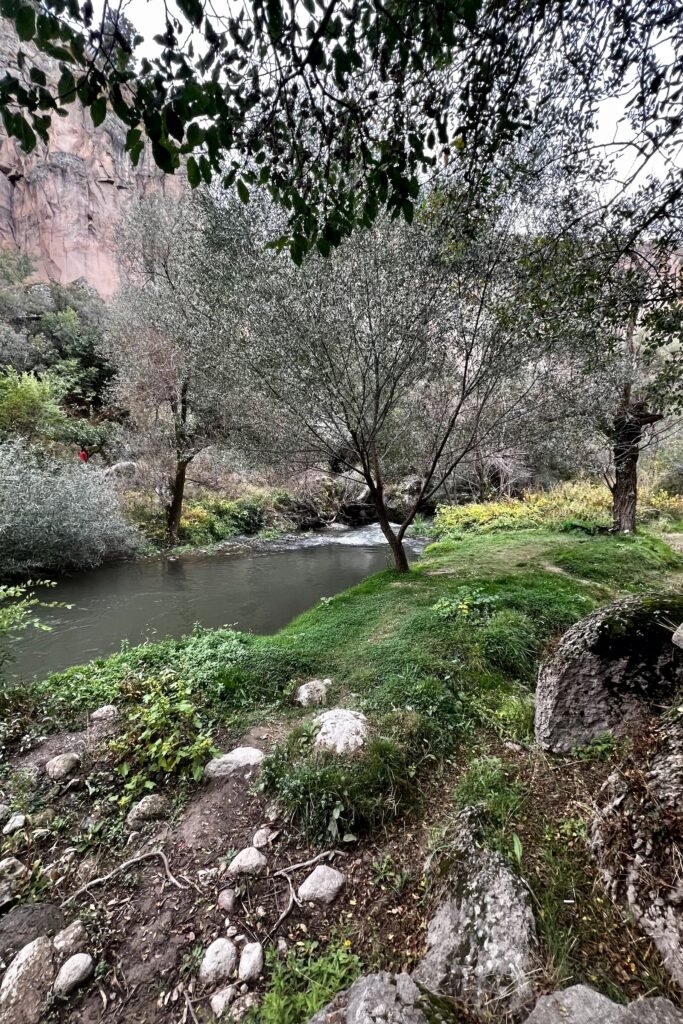
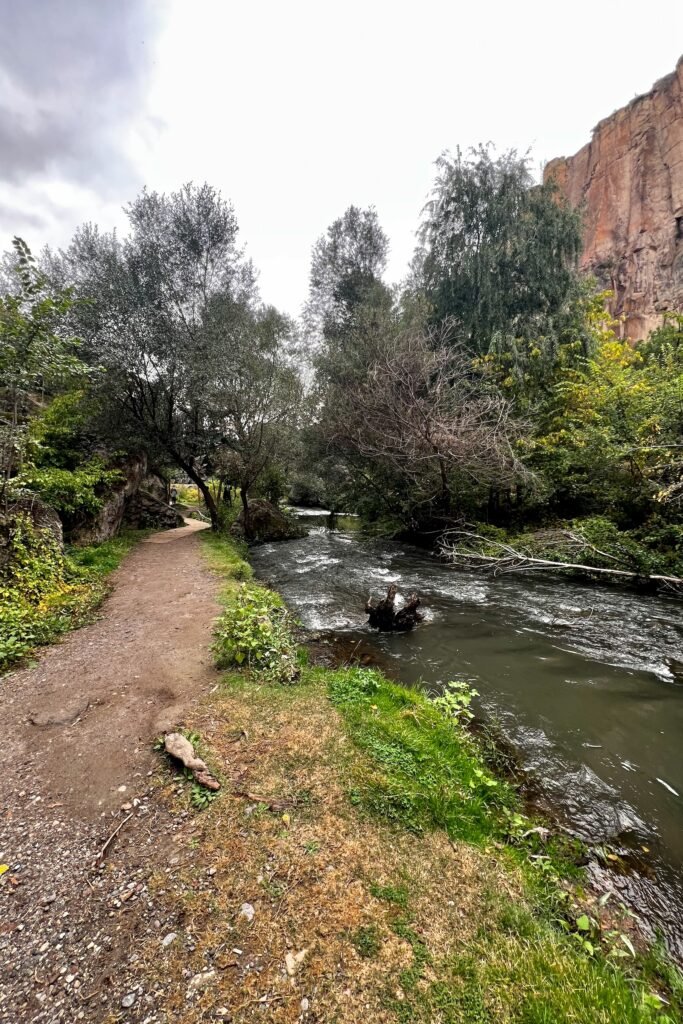
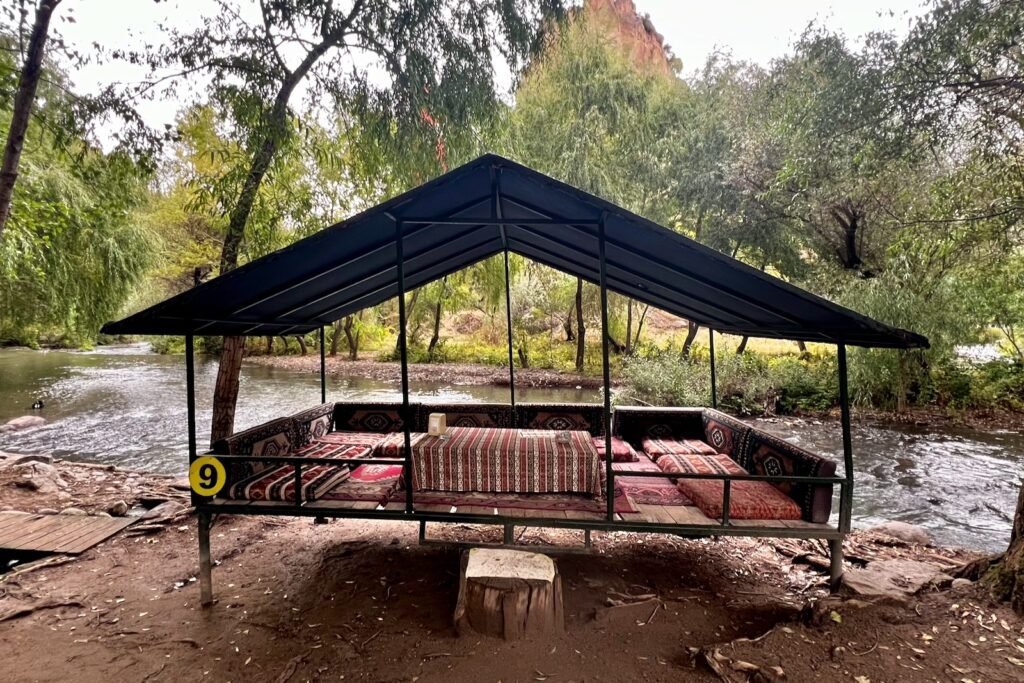
Today, the combination of flowing water, trees, towering cliffs, hiking trails, and centuries-old rock churches makes Ihlara feel completely different from the dry, almost otherworldly scenery people often associate with Cappadocia.
We only hiked about four kilometers.
It was perfect.
There were trees. There was water. There were winding trails beneath enormous cliffs. There were ancient churches tucked into the rocks. There were also enough stairs to make my legs question several of my recent life choices.
And I loved every minute of it.
Sometimes you don’t realize how badly you need to be surrounded by nature until you finally are. After months of deadlines, work, screens, traffic, errands, and everyday life, walking through that valley felt like somebody had turned the volume of the world down.
Ihlara refreshed my soul.
The Rock-Cut Churches of Ihlara
One of the things that makes Ihlara Valley so extraordinary is the number of churches and monastic spaces carved directly into the cliffs. During our hike, we visited Ağaçaltı Kilisesi (Under the Tree Church), Sümbüllü Kilise (Jacinth or Hyacinth Church), and Yılanlı Kilise (Serpent Church). We had also hoped to see Kırkdamaltı Kilise (St. George’s Church), but it was closed during our visit.
Many of these churches date to the Byzantine period and still contain centuries-old frescoes depicting biblical stories, saints, and other religious figures. The paintings were more than decoration; in communities where many people could not read, images helped communicate religious stories and teachings.
Walking into these spaces is surreal. You aren’t looking at a reconstruction or something recreated for visitors. You are standing inside rooms carved into the cliffs centuries ago, surrounded by traces of the people who once worshipped and lived there.
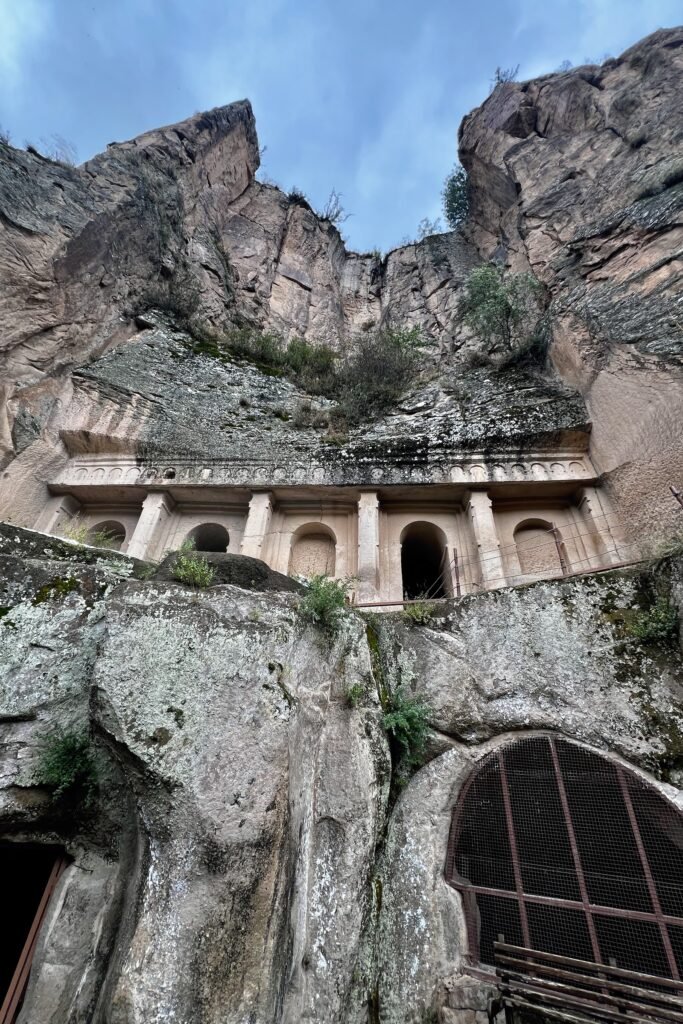
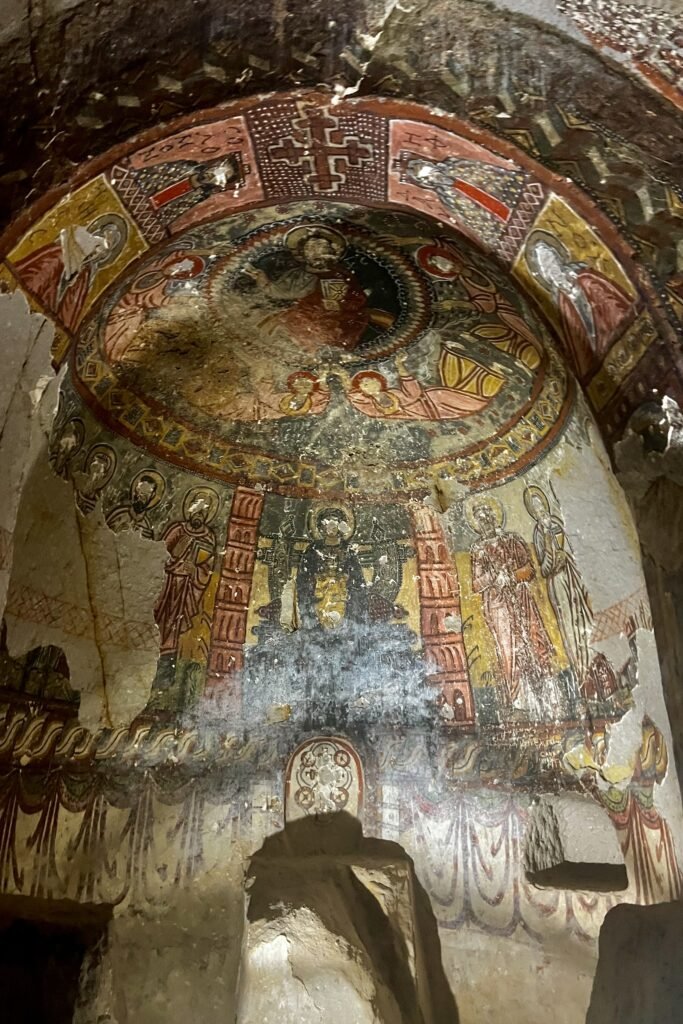
I won’t attempt to cover the history of every church here—there are far too many, and each deserves more attention than a paragraph can give it. I’ve included links in the Sources & Further Reading section at the end of this post for anyone who wants to learn more about the individual churches of Ihlara Valley.
And Kırkdamaltı?
That one is simply going on the “next time” list.
Cappadocia has a very effective way of making that list longer rather than shorter.
When Four Kilometers Break the Schedule
Ihlara took considerably longer than planned.
Nobody seemed particularly sorry about this.
Unfortunately, our lingering meant we had to skip the remaining stops scheduled for that afternoon. By the time we finally ate lunch, it was after 4 p.m., which I suppose technically makes it either a very late lunch or an aggressively early dinner.
We eventually made our way to Elevres Stone House Hotel, where we were staying for the night. There was just enough time for a second dinner, settling into our rooms, and perhaps briefly pretending we were going to rest.
Because naturally, our day wasn’t finished.
Turkish Night: Apparently We Had Energy Left
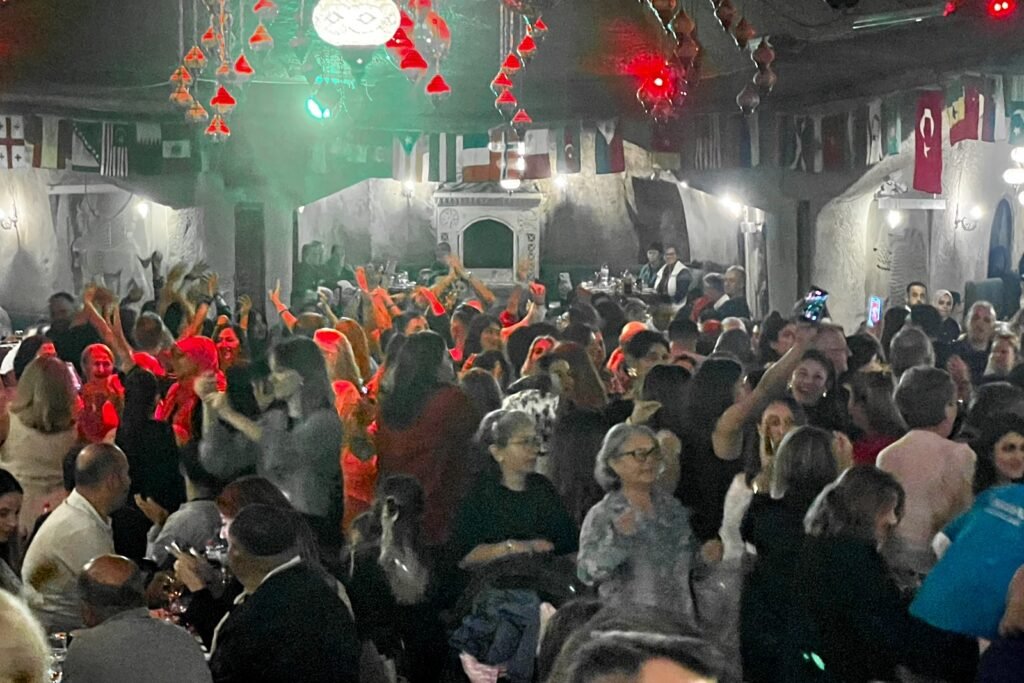
That evening, we headed to Yaşar Baba Restaurant for Turkish Night.
This was pure fun.
There was traditional Turkish dancing, a belly dancer, a generous selection of mezes, music, plenty of laughter, and—speaking strictly for myself here—lots and lots of rakı.
We finally returned to the hotel just after midnight, and everyone disappeared into their rooms.
I suspect nobody needed a meditation app to fall asleep that night.
Day Two: Balloons? Maybe Next Time
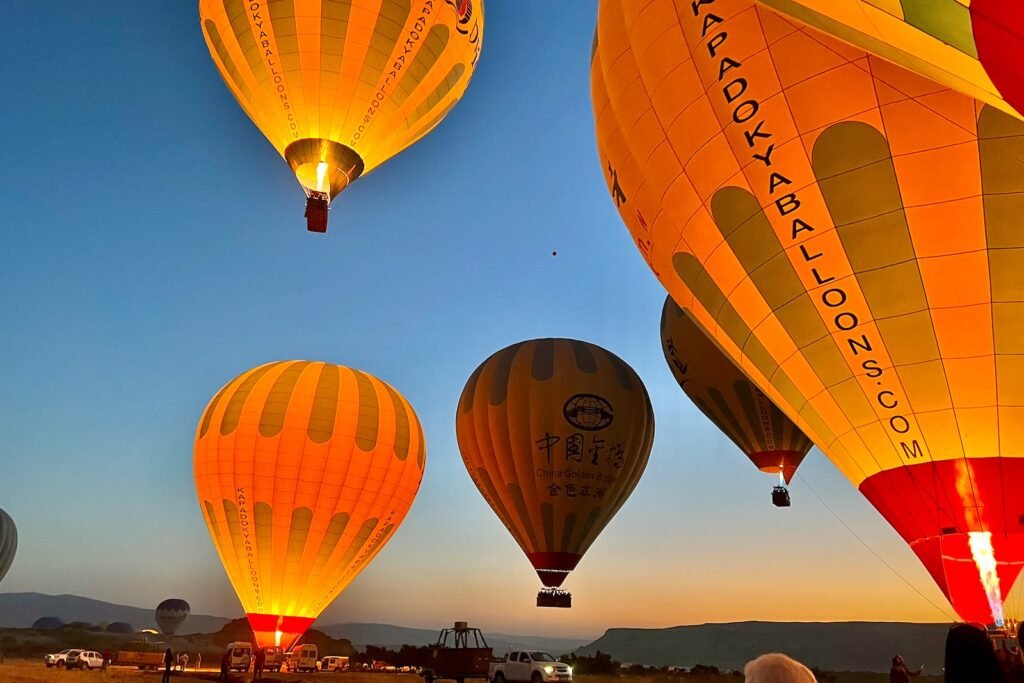
The following morning, there was an opportunity to take a hot-air balloon ride.
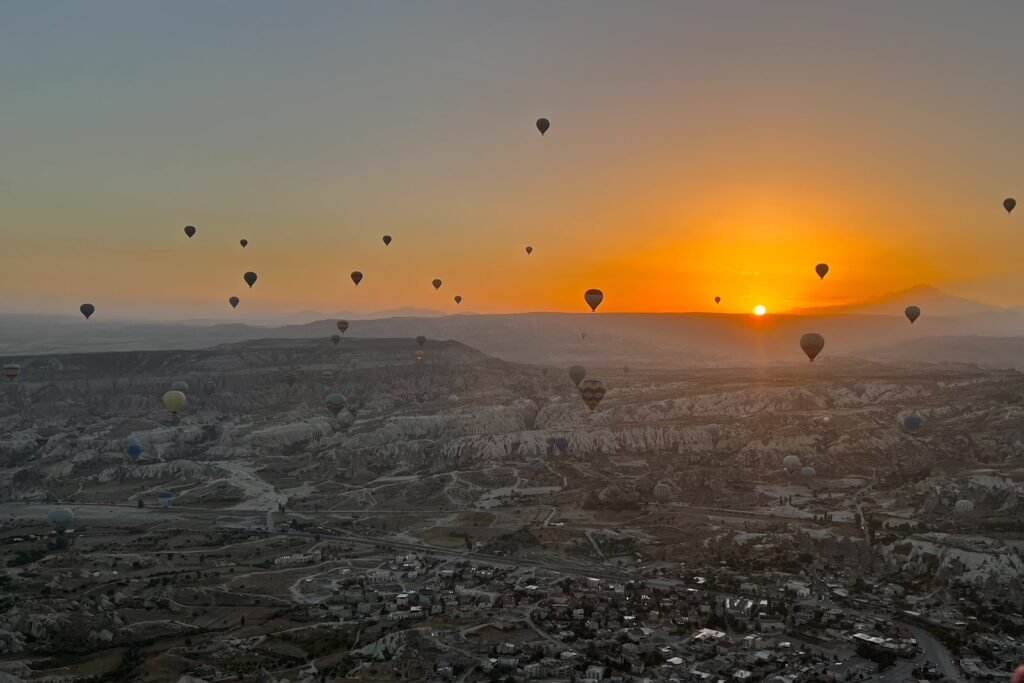
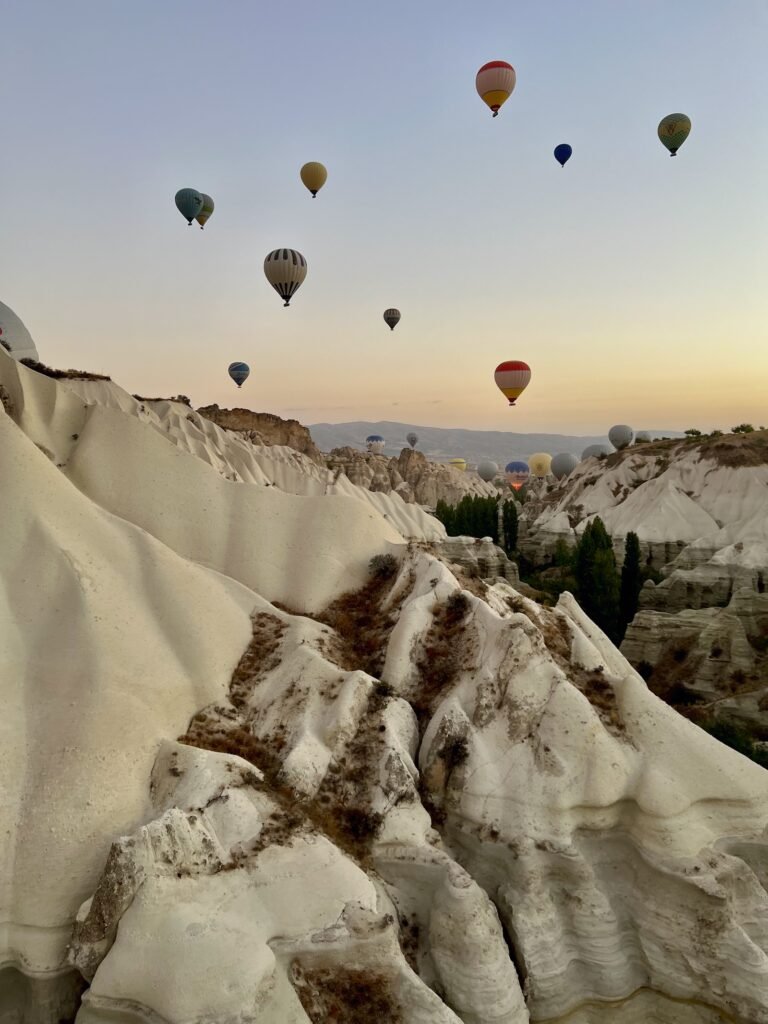
Cappadocia’s balloons have become one of Türkiye’s most recognizable images, and there is something genuinely magical about floating above that strange landscape as the sun rises.
I know because I did it with my mom in 2022.
So this time, I skipped it.
Part of me was tempted, but another part of me—the part controlling my exhausted legs—said, “Woman, stay in bed.”
For once, I listened.
I’ll share a few photos from my 2022 balloon ride instead, because it absolutely deserves to be represented here.
9 A.M. Seems Like a Perfectly Reasonable Time for Wine
By 8:30, we were back on the road.
Because Ihlara had rearranged our schedule the previous day, Day Two was now even more ambitious.
Naturally, our first stop at around 9 a.m. was a Turasan wine shop in Ürgüp.
As one does.
Turasan is one of Cappadocia’s best-known wine producers, and the region has a long winemaking tradition supported by its volcanic soil, dry climate, and locally grown grape varieties. We stopped at one of Turasan’s wine shops to browse the local wines. I skipped any tasting after the previous night’s rakı.
So yes.
Wine at 9 a.m.
It was educational.
I am committed to learning.
The Three Beauties
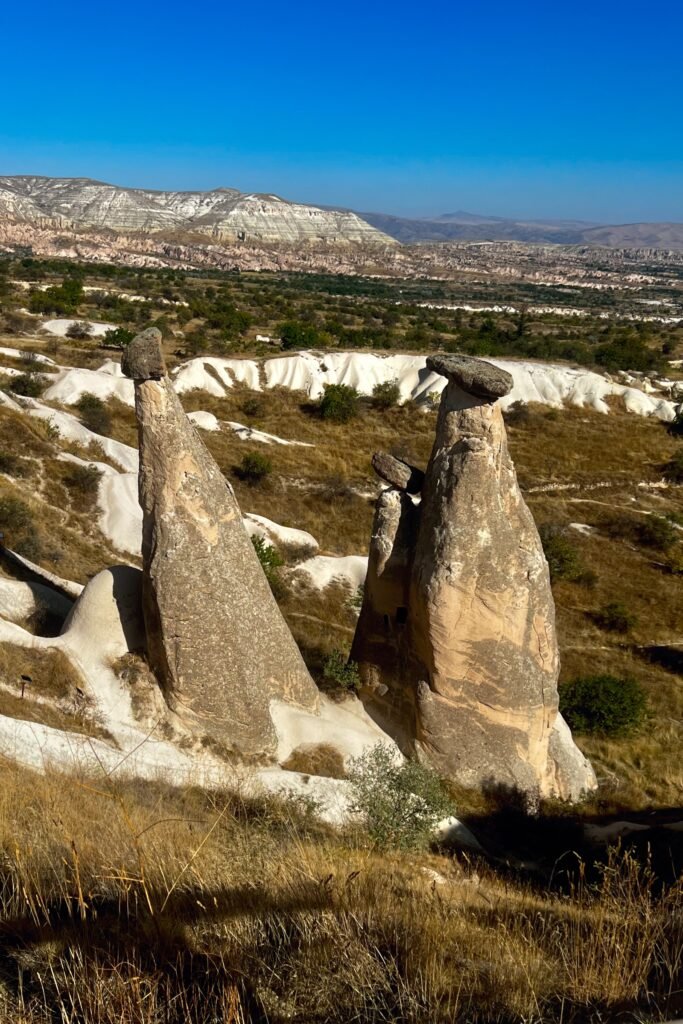
Next came one of Cappadocia’s most recognizable formations: The Three Beauties near Ürgüp.
These three neighboring fairy chimneys have become one of the visual symbols of Cappadocia. Local legends have grown around them, and the formations are often imagined as members of a family.
Geologically, they formed through the same long process that shaped Cappadocia’s other fairy chimneys. Softer volcanic material gradually eroded, while harder rock above protected the columns beneath it.
This is one of those Cappadocia stops where you’re tempted to take the same photograph twelve times.
You know.
Just in case the rock moves.
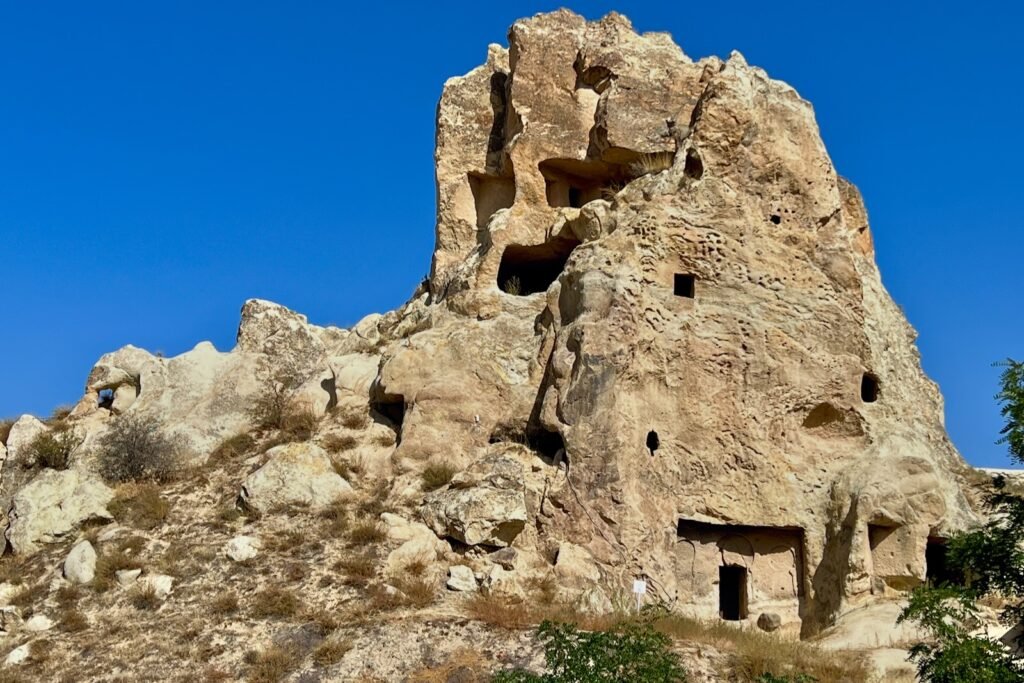
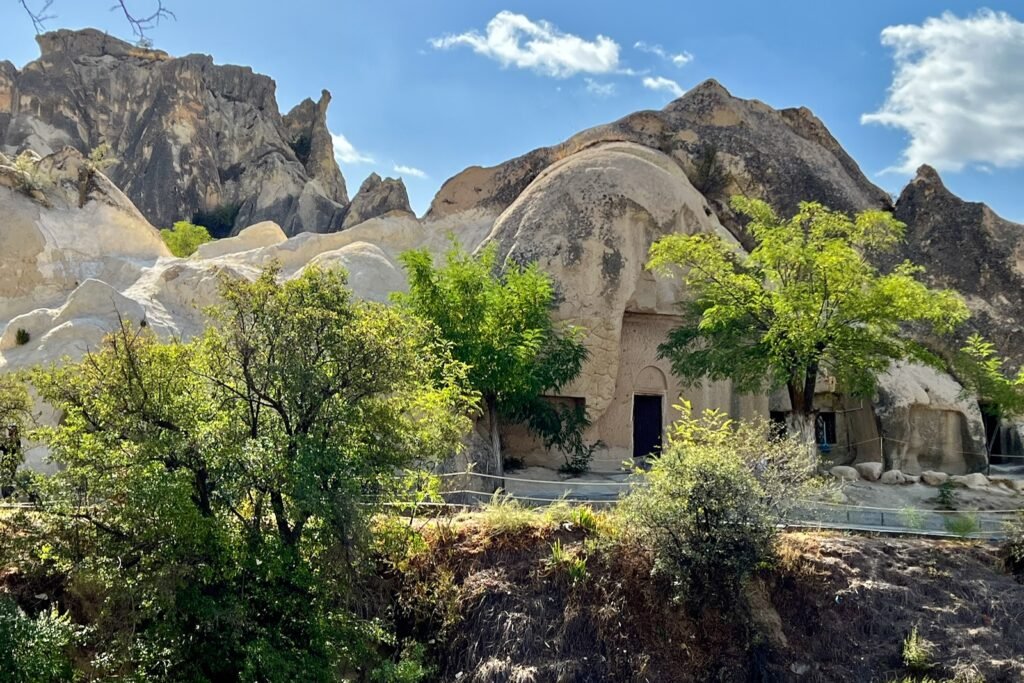
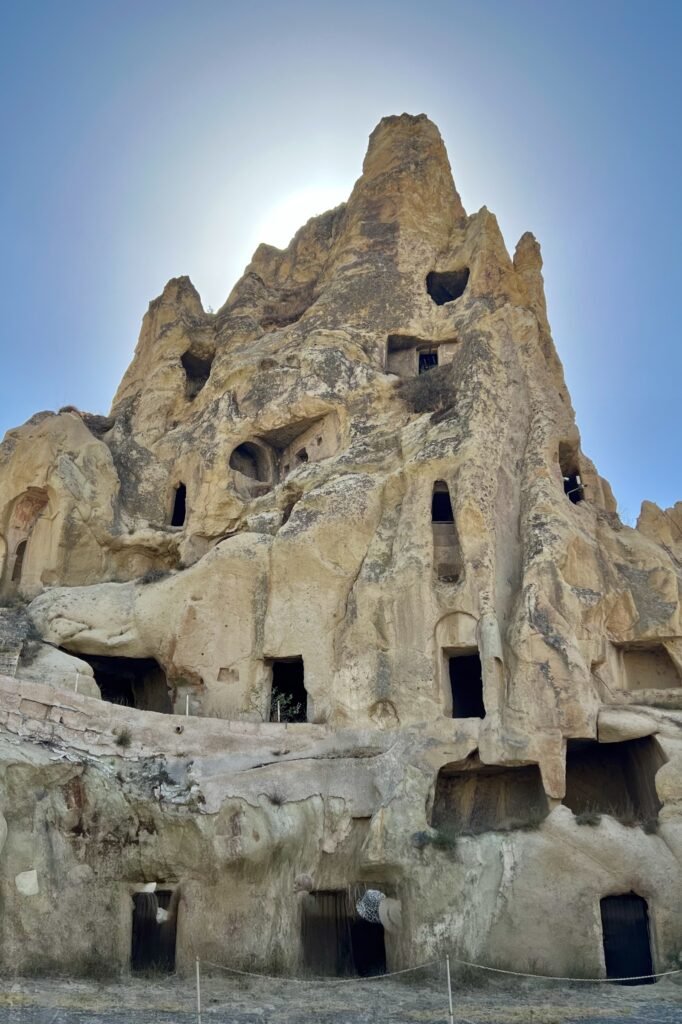
Göreme Open-Air Museum
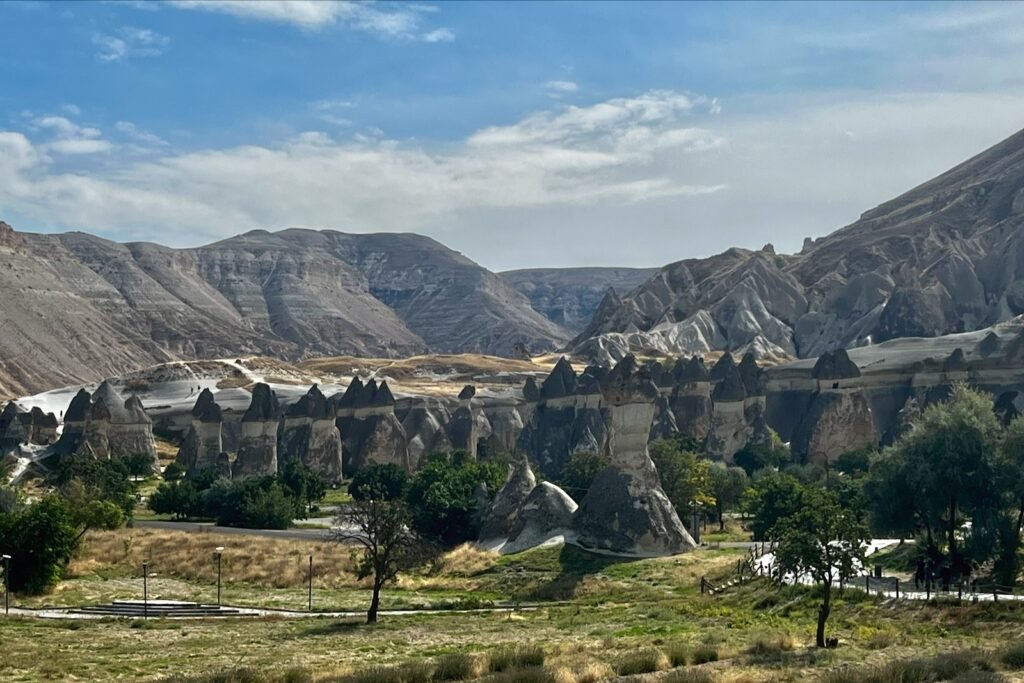
From there, we continued to one of Cappadocia’s most important historical sites: the Göreme Open-Air Museum.
Göreme became an important center of monastic life during the Byzantine period. Its rock-cut complex contains churches, chapels, dining halls, living spaces, and beautifully preserved frescoes carved and painted directly into the volcanic rock.
The larger Göreme National Park and Rock Sites of Cappadocia were added to UNESCO’s World Heritage List in 1985, recognizing both the region’s extraordinary geology and its cultural history.
It is one of those places where Cappadocia’s landscape and human history become almost impossible to separate.
And it is also one of those places where you spend a great deal of time looking upward while trying not to trip.
Paşabağ: Monks and Fairy Chimneys
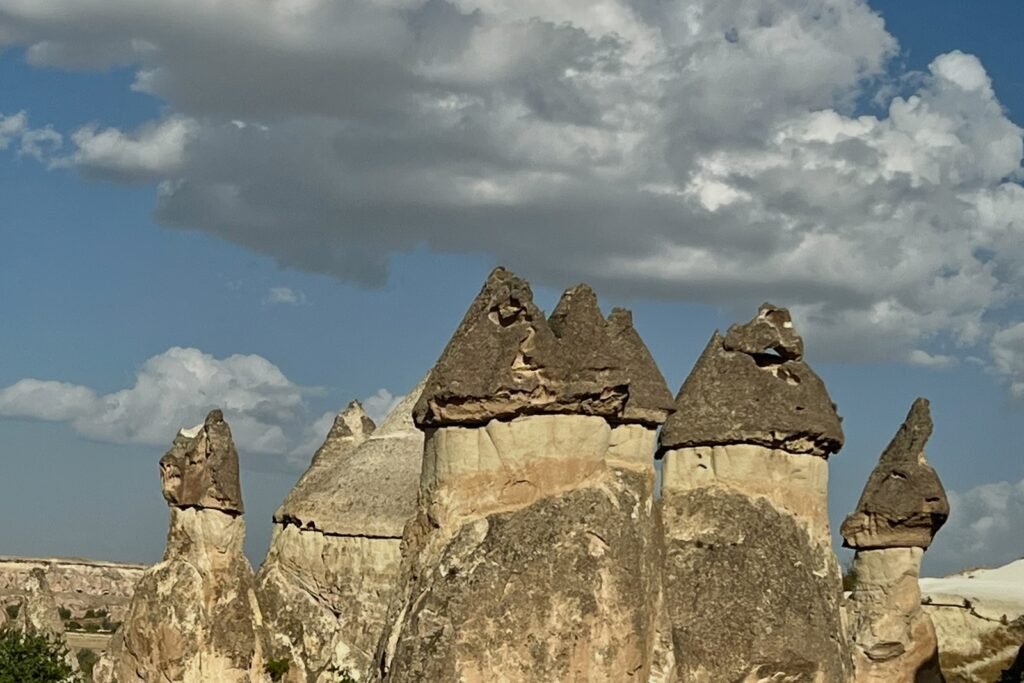
Next came Paşabağ, also known as Monks Valley.
Paşabağ is famous for some of Cappadocia’s most dramatic fairy chimneys, including formations with multiple stone caps. Christian hermits once carved chapels and living spaces into the formations, and one of the best-known is traditionally associated with St. Simeon.
These are the kinds of formations that make Cappadocia look completely unreal.
Except after two days there, you almost stop noticing how bizarre everything is.
“Oh, sure. Another enormous mushroom-shaped volcanic tower somebody carved a room into centuries ago. Totally normal.”
Devrent Valley: Let Your Imagination Do the Work
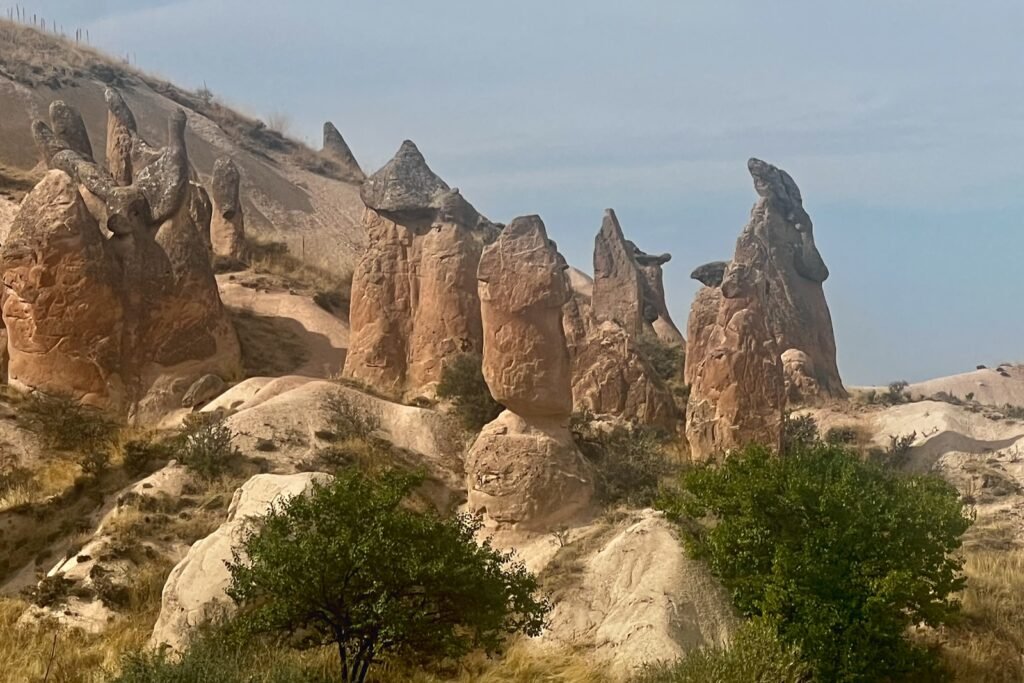
Then we visited Devrent Vadisi, commonly called Imagination Valley.
Unlike many of Cappadocia’s other valleys, Devrent is known primarily for its naturally shaped rock formations rather than churches or cave settlements. Wind and water have sculpted the rocks into forms that visitors interpret as animals, people, and other familiar shapes.
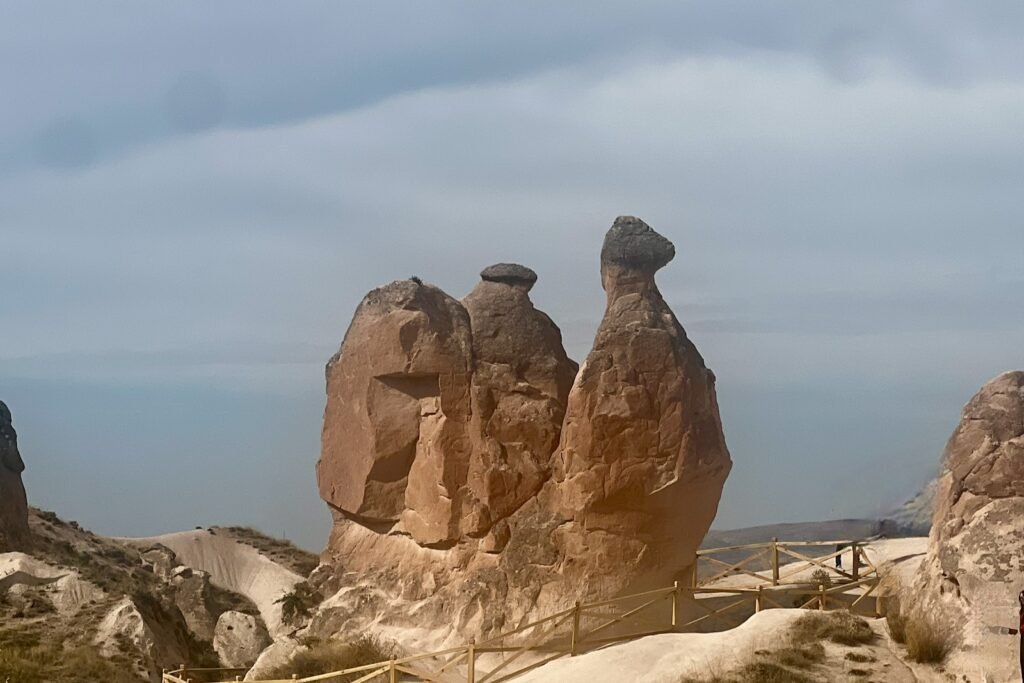
Its most famous formation looks remarkably like a camel.
This is basically cloud-watching for rocks.
Everyone sees something different.
And once somebody points out an animal shape, you will never be able to unsee it again.
My First ATV Ride
At some point during this already-packed day, it was decided we needed yet another activity.
So we went ATV riding.
I had never driven an ATV before, so that part was genuinely fun. However, if I returned, I would probably choose one of the other options.
There were around twenty of us riding in one long line, and we never got to go particularly fast. I had imagined myself tearing dramatically across the Cappadocian landscape.
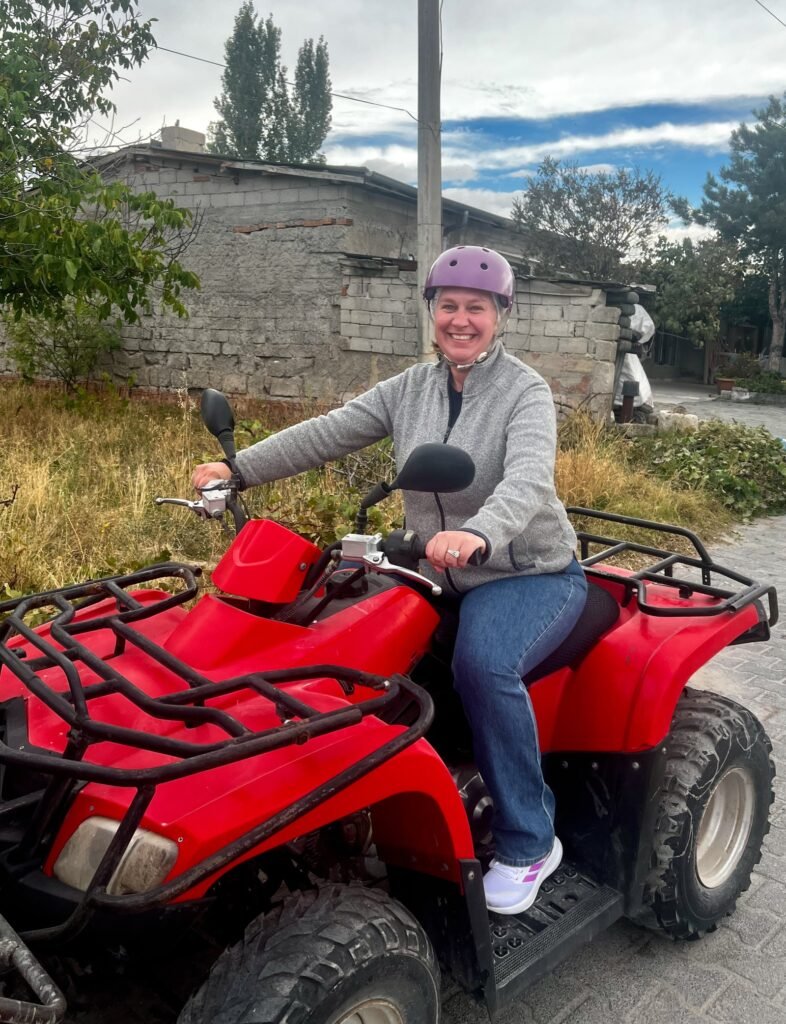
Reality was slightly more:
putt putt putt putt putt.
It wasn’t exactly Mad Max: Cappadocia.
The other options included jeeps and horses, and I think next time I would choose horseback riding. Wandering through the valleys on horseback sounds pretty wonderful.
Also, presumably the horse is less likely to require quite so much work from my right thumb.
Pigeon Valley: One Last Stop
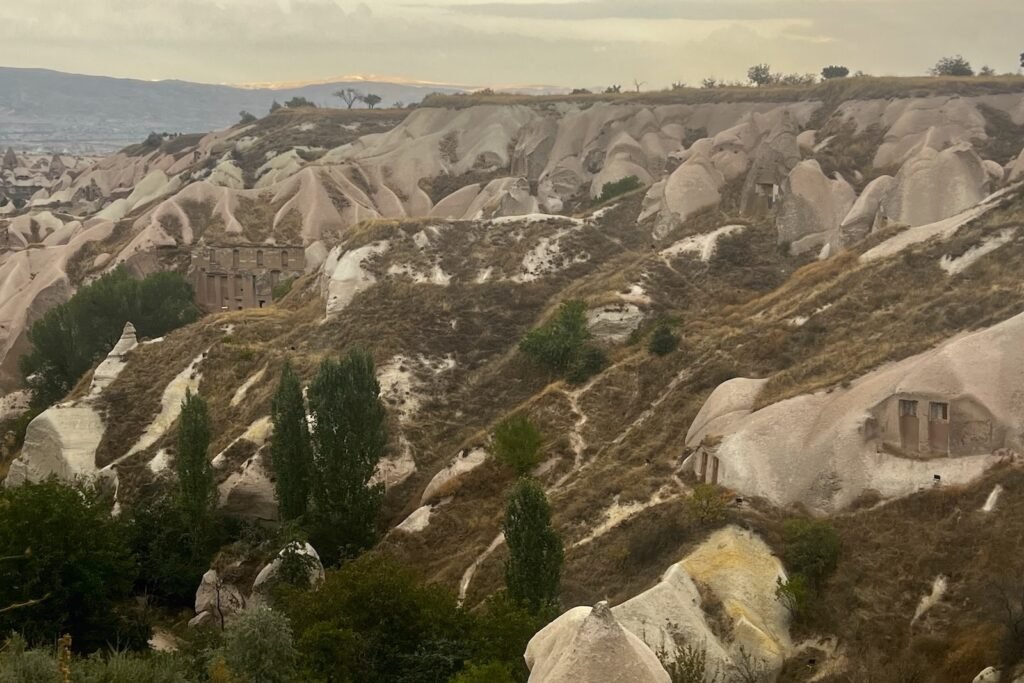
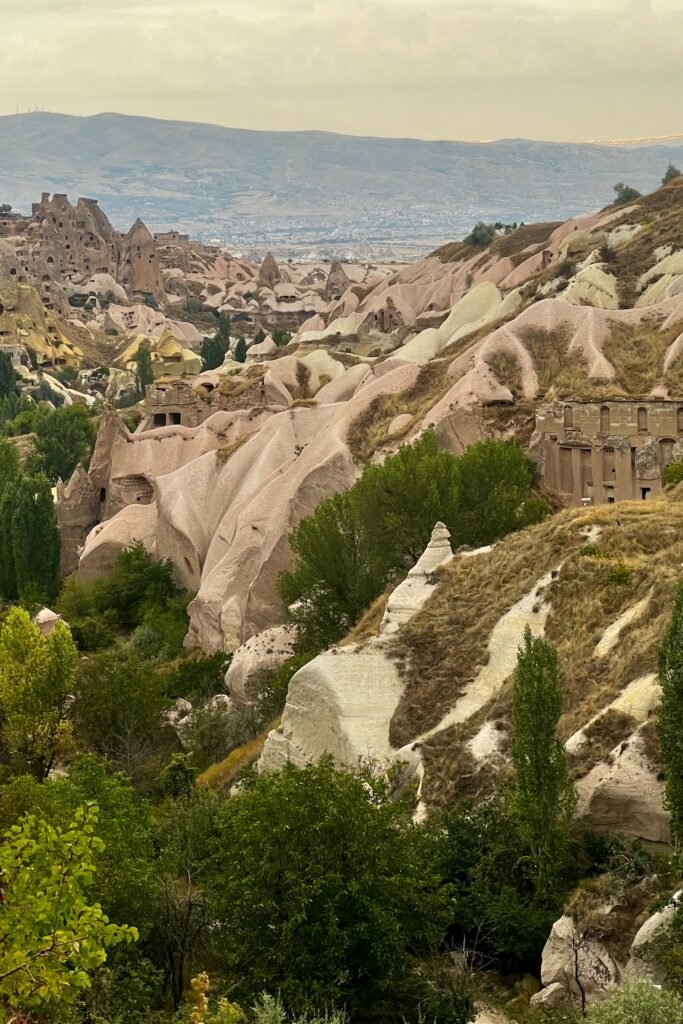
Our final stop was Pigeon Valley, or Güvercinlik Vadisi.
The valley takes its name from the countless dovecotes carved into Cappadocia’s soft rock. For generations, local residents kept pigeons because their droppings provided valuable fertilizer for vineyards and agricultural land. Even though the birds no longer play the same economic role they once did, the carved nesting spaces remain visible throughout the cliffs.
And the valley is gorgeous.
There are sweeping views, unusual rock formations, a café, little shops, and seemingly endless things demanding to be photographed.
By this point, I was exhausted.
Naturally, I took about 100 pictures.
Because apparently fatigue has no effect whatsoever on my camera finger.
Heading Home
Eventually, we climbed back onto the bus for the drive to Ankara.
And I was ready.
Really ready.
The return trip took somewhere between three and a half and four hours, giving me plenty of time to sit quietly, look through an entirely unreasonable number of photographs, and think about everything we had managed to squeeze into two days.
It had been quick, exhausting, and wonderful.
I’m especially grateful to Görkem and Musa for organizing the trip, to Musa for being such a wonderful guide and friend, and to Ankara Gezi Travel for making the weekend happen for our group.
Apparently, we enjoyed ourselves enough that we’re already planning another trip next month.
Will I go?
Absolutely.
Will I pack lighter?
Probably not.
Will I take another 500 photos?
We all know the answer to that.
Cappadocia, Four Years Later
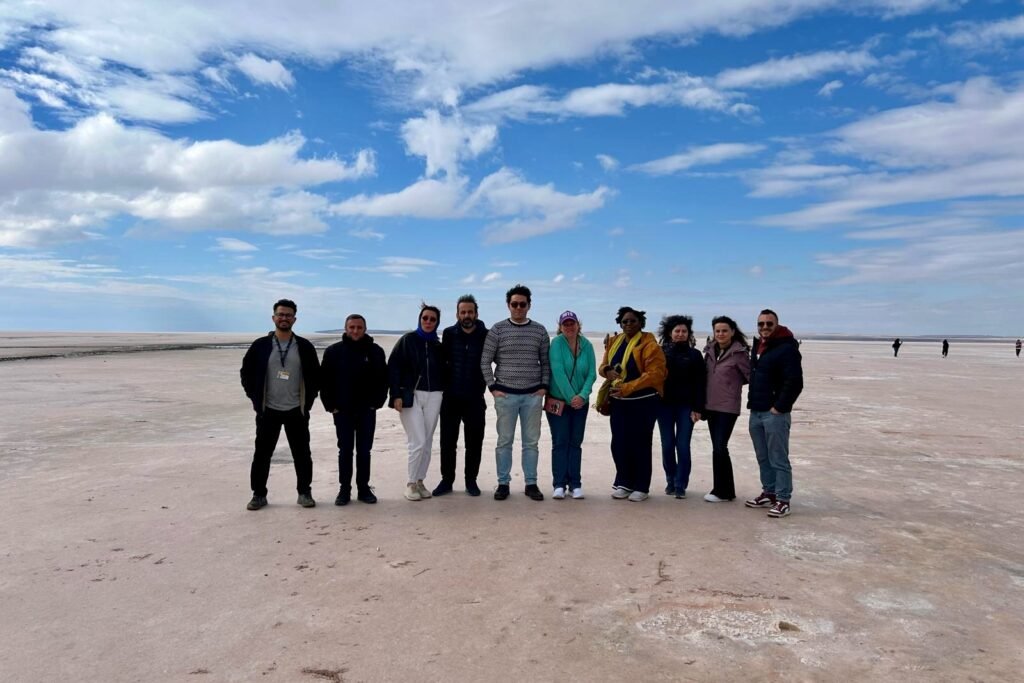
My first trip to Cappadocia will always be special because I experienced it with my mom in 2022, during the trip that first introduced me to Türkiye.
Returning almost exactly four years later gave me a chance to see the place—and my own life—from a completely different perspective. This time Türkiye wasn’t somewhere I was visiting. It was home, complete with all the tiny, everyday things that have gradually made Ankara feel like mine. I wasn’t traveling with a tour group of strangers. I was traveling with friends I had made here.
And somehow, amid the fairy chimneys, ancient churches, underground cities, too many stairs, one very early stop at a wine shop, and roughly seven thousand photographs, that realization quietly became one of my favorite parts of the weekend.
Sometimes returning to where you’ve already been is the best vantage point from which to see just how far you’ve come.
Wishing you places worth returning to, friends who make the journey more fun, and adventures that leave you tired, happy, and already wondering where you’re going next.
With love from Ankara,
Tiffles, Stormy & Smokey 🐾❤️
Sources & Further Reading
For readers who would like to learn more about the history, geology, churches, and cultural significance of Cappadocia, these are excellent places to start:
UNESCO World Heritage Centre — Göreme National Park and the Rock Sites of Cappadocia
UNESCO’s overview of Cappadocia’s extraordinary combination of geology, Byzantine rock-cut churches, cave settlements, and underground communities.
Republic of Türkiye Ministry of Culture and Tourism — Göreme Open-Air Museum
Official information about Göreme’s monastic history, rock-cut churches, frescoes, and museum complex.
Republic of Türkiye Ministry of Culture and Tourism — Ihlara Valley
Official information about the canyon, its cultural history, and its rock-cut churches.
Aksaray Provincial Directorate of Culture and Tourism — Ihlara Valley
Additional background on Ihlara Valley, the Melendiz River, and the region’s development as an important Christian religious center.
Aksaray Provincial Directorate of Culture and Tourism — Historic Churches
For readers who want to explore the individual churches of Ihlara Valley in more depth, this resource includes information about Ağaçaltı, Sümbüllü, Yılanlı, Kırkdamaltı, and many others throughout the region.
GoTürkiye — Cappadocia
Türkiye’s official tourism portal offers an accessible overview of Cappadocia’s valleys, fairy chimneys, underground settlements, cultural heritage, and major attractions.
Wines of Türkiye — Cappadocia and Turasan
Background on Cappadocia’s wine culture and the history of Turasan Winery.