

A few months ago, I wrote about the unexpected news that my apartment building was going to be demolished. At the time, I was trying to stay optimistic.
One of the things Türkiye has taught me is that life rarely follows the exact plan you make for it, and sometimes the unexpected turn becomes the beginning of something wonderful. I was convinced that somewhere in Ankara there was another apartment waiting for me, Stormy, and Smokey—a place where we could settle into our next chapter.
I packed my boxes, searched through countless listings, and prepared myself for another adventure. At this point, my packing tape and I have spent enough time together to qualify as close friends.
But this chapter came with much more stress than I expected, because apparently Ankara had decided that four moves in less than three years was not enough character development. I’m moving again.
Before I continue, I should offer a small disclaimer: this is not going to be one of my usual lighthearted Tiffles in Türkiye posts. There will still be humor, because if you cannot laugh at the absurdities of life abroad, you may eventually start arguing with your appliances—and mine already have far too much to say.
But parts of this experience were stressful, expensive, and genuinely frightening. I debated whether to write about it because there is always a temptation to share only the beautiful parts of living abroad—the friendships, the adventures, the cultural discoveries, and the days when I walk through Ankara and still feel as though I am on vacation.
Those things are real, but the difficult moments are real too. I started this blog to tell the honest story of building a life in Türkiye, and if my experience helps another expat ask one more question before signing a lease, it is worth sharing.
The Apartment That Was Supposed to Solve the Problem
I moved into my current apartment on March 27, 2026, after learning that my previous building would be demolished. If you missed that chapter of my Ankara adventure, you can read about it in Expat Life in Ankara: When Your Dream Apartment Gets Demolished (Literally).
At the time, this luxury apartment in Ankara seemed like the solution: it was furnished, fell within the mid-range of the market I was searching, and was advertised as a luxury residence. It was also in a lovely neighborhood nearby. But luxury, I have since learned, is a very flexible word—and apparently one without an expiration date. Perhaps the apartment might have earned that description twenty years ago, but its present condition told a very different story.
The lease described it as clean, ready to use, undamaged, and free of deficiencies. I was not expecting a palace, but I did expect a functional home and a reasonable process for handling anything that went wrong.
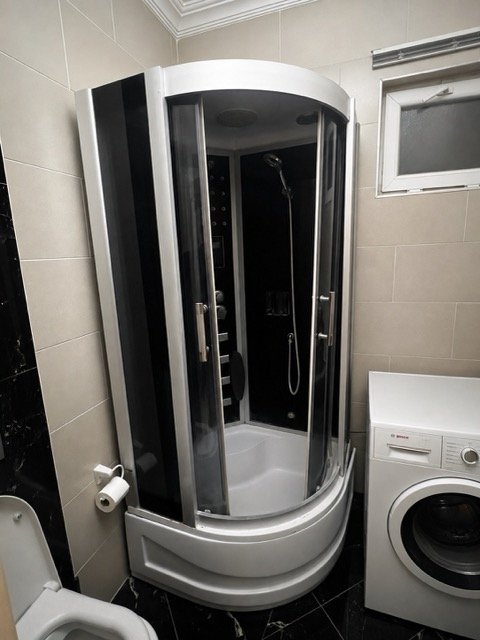
The problems began immediately. The enclosed shower cabin was old, dirty, and damaged, with one door hanging off, posing a safety concern. As if the door hanging off wasn’t enough, the agent told me the last tenant wouldn’t plug the unit in because he deemed it “unsafe,” and then the shower handle exploded within the first week.
Looking back now, I feel like this should have been a nonstarter for me. But I thought the shower looked kinda cool, so I was excited to try it. What was I thinking?!?!?!
The shower took three weeks to repair. During that time, I did not feel safe using it, so I took very few showers. My shower routine became less of a daily habit and more of a risk assessment, which was not exactly the glamorous luxury-residence lifestyle the listing had encouraged me to imagine.
Additionally, the toilet seat was hanging off the toilet, a balcony window would not close properly, and the day after I moved in, a shelf inside the refrigerator door fell off. Then a lightbulb exploded in the apartment entryway because subtlety had clearly left the building, too.
Even after it was replaced, the new bulb continued to flicker, which made me worry that the problem might extend beyond the bulb itself. This was a safety concern for me. Over the following months, the refrigerator and freezer stopped cooling properly, and I lost food; I discovered that two burners on the stove did not work at all; a blind fell off the wall the first time I tried to close it; and plumbing and other maintenance concerns continued.
The replacement refrigerator shelf was ordered and received by the agent, but it was not delivered to me for another six weeks.
The gas stovetop had two functioning burners and two that did not work at all. It was eventually “fixed,” but afterward the two non-functioning burners worked only when the other two burners were also turned on. That did not make me feel more confident; it made the burners seem as though they had formed a complicated cooperation agreement that no one had explained to me. I stopped using the kitchen because I was not convinced the stovetop was safe.
Some repairs were delayed, while others were only partially completed. None of these issues, on their own, would have been the end of the world, though.
Apartments have quirks, appliances break, and buildings age. I can live with quirks; I have two cats, so my tolerance for unexplained behavior is already quite high. But when the quirks begin forming a committee, what wears you down is the process surrounding every repair.
Each problem required messages, explanations, follow-ups, and an ongoing effort to determine who was actually responsible for ensuring something happened. Somewhere along the way, I became the unpaid project manager for an apartment I did not own—a position that came with no salary, no benefits, and not even four functioning stove burners. The landlords repeatedly asked me to “just live with” everything as it was. I told them no: if that was their attitude toward me and the apartment’s condition, I did not understand what I was paying for. I was not receiving value for the substantial rent I was paying.
The agent’s response was, “You saw it before you moved in.” Yes, I saw the apartment. What I could not have known during a viewing was that the shower was broken, the refrigerator was about to fail, or the gas stovetop would require one set of burners to be lit before the others would work. A viewing is not a home inspection, an appliance stress test, and a gas-appliance troubleshooting session rolled into one.
Eventually, I stopped reporting every small issue, not because everything had been resolved, but because I no longer believed another message would lead to meaningful action. That is an uncomfortable place to reach when you are paying substantial rent for the place that is supposed to feel like home.
Trying to Make It Work
I did not immediately decide to leave. I reported problems, communicated my concerns, allowed time for repairs, and tried to be patient because I understand that managing a property is not always simple.
I also did not want to become the foreigner who encounters a problem and instantly assumes the worst. There can be language gaps, different expectations, and ordinary scheduling delays, and I tried to leave room for all of that. However, I had experience with three other apartments in the preceding two and a half years, so I knew the lack of response was something I needed to follow up on.
In this case, meaningful involvement from the landlords was difficult to obtain until I said I was considering moving out. Before then, messages were delayed, concerns were passed along, and repairs often required repeated follow-up. Nothing, it seems, improves communication quite like a tenant locating the exit.
Once leaving became a real possibility, communication became more urgent, and there was greater willingness to discuss solutions. It is remarkable what the phrase “I may move out” can do for response times. I appreciated the effort, but by then the issue was no longer only a shower, refrigerator, stove, or list of repairs. The repeated experience had changed my confidence in the arrangement.
Enter the VIP
The landlords became much more involved only after I said that I was planning to move out. Because the landlady does not speak English, her husband stepped into the conversation. I understood that she was a lawyer and that he led a small political organization in Ankara. More importantly—or at least more frequently mentioned—he was, in his own estimation, a Very Important Person.
So, privately, I began calling him VIP. Our conversations followed a fairly dependable format: I tried to explain what was wrong with the apartment, and he tried to explain how important he was. I mentioned the damaged shower, the refrigerator, and the flickering light; he reminded me of his position. It was less a conversation than two separate radio stations playing at the same time, except one of them controlled the volume.
I am sure VIP has responsibilities, accomplishments, and people who consider him very important. But I was not asking for political influence, a special favor, or an audience with an important person. I wanted the apartment to be safe and the things inside it to function as they should. In that moment, the most important person in Ankara would have been whoever could make the stovetop and refrigerator work, and the lightbulb stop flickering.
I was never expecting perfection. I understand that apartments have problems, especially in a city where many buildings have their own quirks and histories.
What I needed was confidence that when something went wrong, the people responsible would take it seriously and work with me toward a solution. When you live in another country, home carries extra weight: it is the place where you recover after navigating a different language, unfamiliar systems, and the everyday work of building a life somewhere new.
After months of feeling that I had to fight for basic matters to be addressed, moving no longer felt dramatic. It felt like the sensible choice.
The Real Estate Agent’s Role
The real estate agent, Alper O., was involved throughout the rental process. On move-in day, while the movers were bringing in my belongings, I found him in the bathroom addressing the issues with the shower and toilet. That moment stayed with me because it was then that I knew at least some of the apartment’s deficiencies were already known before I took possession of it.
The move had to happen quickly, as I was running out of time before the building I was in was shut down. I had seen a number of apartments over the previous months, this one included, but none of them felt right to me. When I had to make a choice, this apartment was the best available to me within my price range. Or so I thought…
Before moving in, I paid a deposit equal to one and a half months’ rent, along with a full month’s rent as the agent’s fee.
The agent demanded that most of his fee be paid in cash. I do not know whether that was illegal, and I am not claiming that it was, but I can say that it made me uncomfortable. The payment was not handled through a clearly traceable electronic transaction, and I was worried this would leave me vulnerable to further issues.
The agent also told me that all maintenance requests should go through him. During the first month, I sent requests almost every day, which meant I was doing an impressive amount of communicating for someone receiving so few replies. He said that he and the landlords were busy, but that they would get to the repairs eventually. My problem was that I was paying for an apartment in a certain condition and was not getting what I was paying for. The agent’s attitude toward me was neither professional nor responsive to my valid concerns. Apparently, many agents in Ankara behave the same way, but I had not experienced these issues before.
Based on my own experience with this rental, I would not choose to work with this agent again. That is my personal assessment of one transaction, not a claim about anyone else’s experience.
Anyone renting in Ankara—or anywhere in Türkiye—should conduct independent research, ask direct questions, request clear written answers, and ensure they are comfortable with the agent, landlord, and other professionals involved before any money changes hands.
Ankara Is Still Home – Just Not This Apartment
After all of this, you might expect me to say I am finally fed up with Ankara. I am not.
I still love this city—its parks, neighborhoods, cafés, street animals, friendships, and the strange little moments that make ordinary days feel special. I love walking its steep hills (although my knees and I occasionally hold a different opinion) and discovering something new around a corner I thought I already knew. Even after three years, there are days when I step outside and feel as though I am on vacation.
That is the complicated thing about loving a place: affection does not require pretending every experience is easy. Türkiye has given me some of the most beautiful moments of my life, while also teaching me to read contracts much more carefully. Both things can be true. This rental experience does not erase the kindness I have found here, the life I have built, or the feeling I still get when Ankara’s skyline catches the evening light.
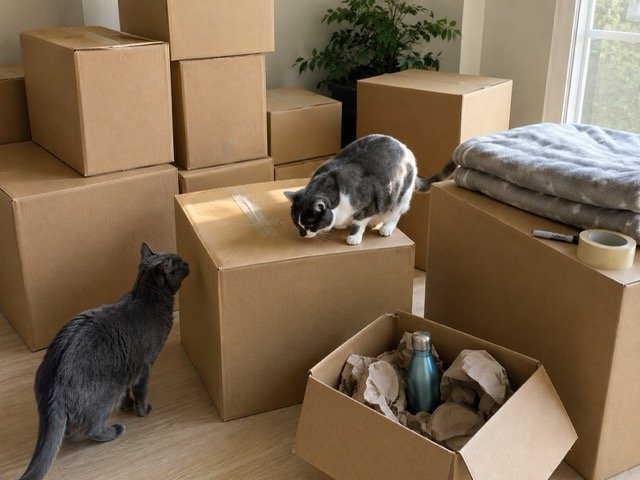
So, once again, I am packing and searching for the next place that Stormy, Smokey, and I will call home. They will supervise with their usual combination of curiosity and judgment, while I arrive at every viewing with a checklist, a camera, and approximately 147 questions. Somewhere in Ankara, there must be an apartment with working appliances, secure shower doors, and a lightbulb that understands its only job is to provide light.
I am not the woman who arrived in September 2023 trying to understand everything at once. I have more experience, more confidence, and a clearer idea of what I need from a home and the people involved in renting it. Ankara is still home; I am moving toward a version of that life that feels safer, steadier, and better informed. Hopefully, the doorway to this next chapter will be a door that works properly.
Another Rental Story for Another Day
Unfortunately, this was not my first expensive lesson in trust. My first rental experience after arriving in Ankara involved people I trusted, inaccurate documents, and a lease that was never properly notarized—problems that eventually jeopardized something far bigger than a broken shower or temperamental stovetop: my residence permit.
My next post will share that first rental experience. I will explain what it taught me and how those lessons inspired me to create a practical rental resource for other expats. The rental resource guide will be available next week.
Before you go, be sure to check out my newly updated post on the word “Hocam” for a fresh look at another chapter of my life in Türkiye.
Wishing you clear answers, functioning appliances, and the confidence to ask one more question before signing anything.
With love from Ankara,
Tiffles, Stormy, and Smokey 🐾
(Currently accepting apartment applications from homes with functioning appliances, firmly attached shower doors, and absolutely no electrical surprises.)