
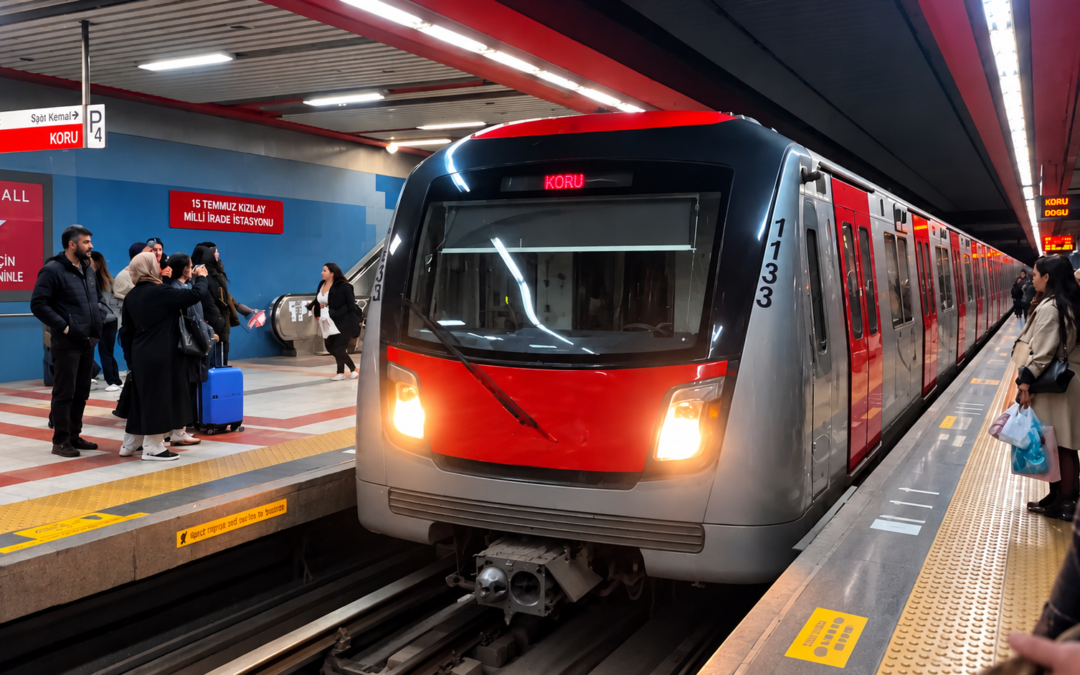
I have a confession.
I am ridiculously fond of Ankara’s public transportation system.
I realize this is not the sort of sentence people usually say with great enthusiasm. People fall in love with cities because of the food, the architecture, the history, or the view from a rooftop at sunset. Apparently, I can develop strong feelings about buses, too.
But after three years of living in Ankara, public transportation has become one of those everyday parts of life here that I genuinely appreciate.
I have taken buses across the city, ridden the metro more times than I could possibly count, used Ankaray to get to AŞTİ, squeezed myself onto crowded trains during rush hour, attempted to decipher the mysterious ways of the dolmuş, and spent a considerable portion of my MBA years traveling back and forth to ODTÜ.
And for someone who would very much prefer not to drive in Ankara traffic, it has given me an enormous amount of freedom.
There Is More Than One Way to Survive Ankara Traffic
If you’ve read my post about driving in Ankara, you already know that getting behind the wheel here can be quite an adventure. There are lanes. These are often treated as suggestions.
There are motorcycles. They may materialize beside you without warning.
There are roundabouts that seem to require equal amounts of confidence, strategy, and divine intervention.
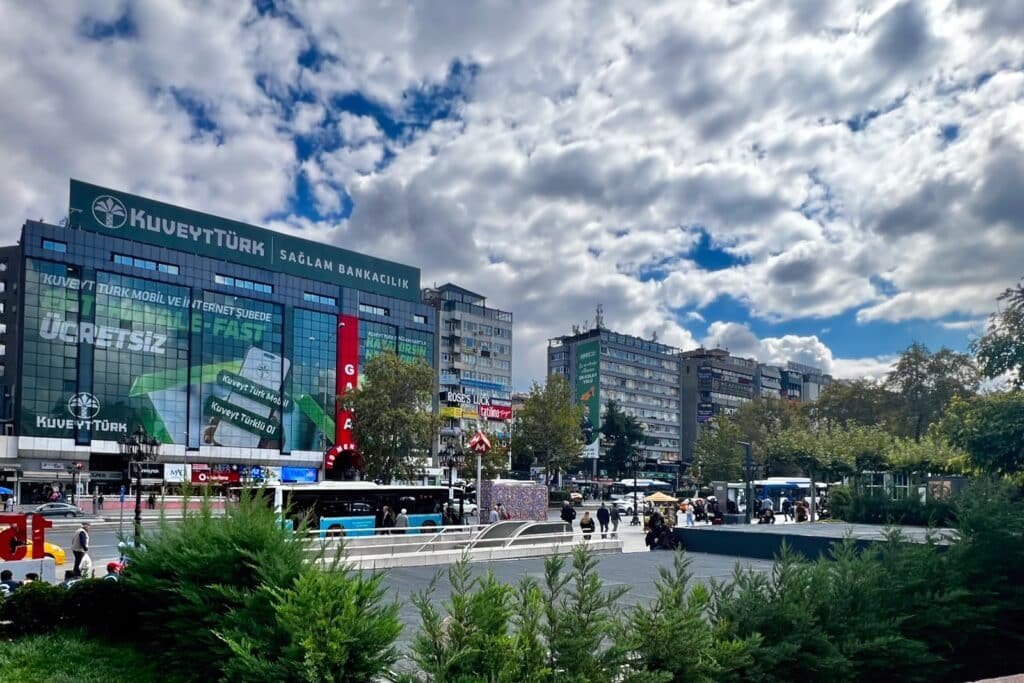
Fortunately, driving is far from the only way to get around the city.
Ankara has EGO buses, Metro, Ankaray, Başkentray, private public-transport vehicles, and, of course, the beloved and slightly mysterious dolmuş.
For people who live here, the system makes it possible to move across a huge metropolitan area without owning a car. For visitors, it makes much of Ankara surprisingly accessible once you understand how everything works.
And once I figured it out, I was hooked.
From Boston to Ankara
Part of my appreciation probably comes from having lived in Boston for eight years.
Boston has an extensive public transportation network, but anyone who has spent enough time relying on the MBTA has probably experienced the special emotional journey of watching a train that is supposedly arriving in two minutes continue to be “two minutes away” for approximately half of your natural life.
So when I moved to Ankara, I came prepared for delays, missed connections, and lengthy waits.
Instead, I discovered a transit system that has generally been remarkably dependable for me.
That does not mean everything runs perfectly. Ankara is a city of millions of people. Rush hour is crowded, buses can get stuck in the same traffic as everyone else, and occasionally something goes wrong.
But in my everyday life here, public transportation has been reliable enough that I use it without thinking much about it.
That may be the greatest compliment I can give a transportation system.
My Old Friend, the EGO Bus
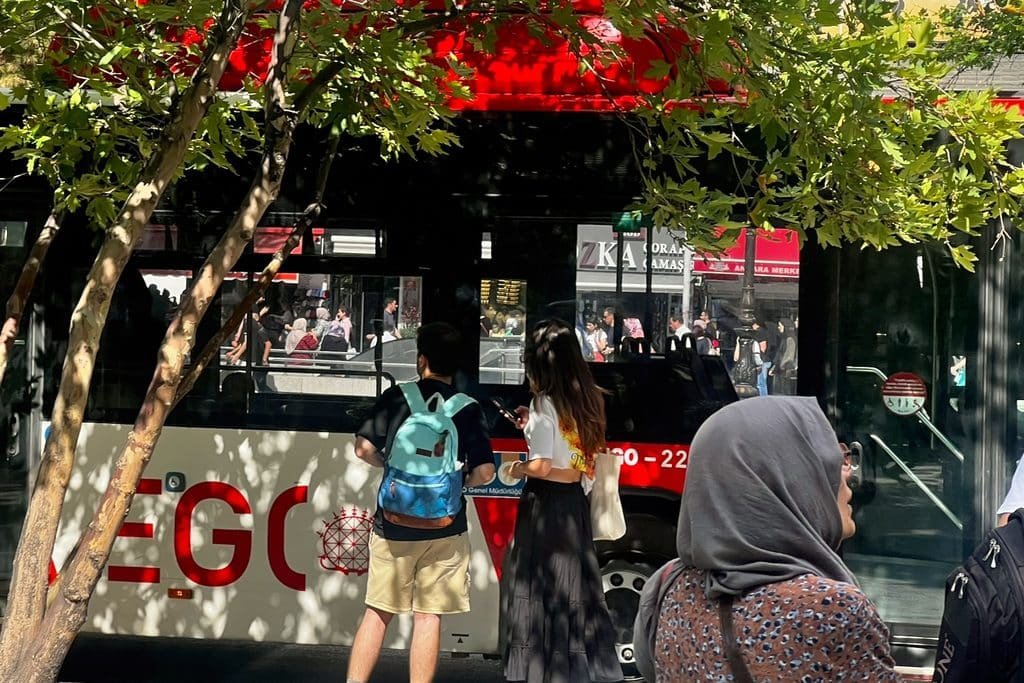
The EGO bus was one of the first parts of Ankara transportation I learned to navigate.
At first, the sheer number of buses was intimidating. I would stand at a stop looking at numbers and destinations while everyone around me seemed to possess some secret Ankara Bus Knowledge that I had somehow missed during orientation.
Eventually, I discovered EGO CEP’TE.
Game changer.
The official EGO app provides bus-route information, departure schedules, and information about where buses are along their routes. I no longer have to stand at a stop wondering whether my bus is three minutes away or whether it has quietly left the country.
You can also visit the official EGO website for bus schedules, Metro information, fares, and service updates. The website is in Turkish, but your browser’s translation feature can help you navigate it in English.
Once you become familiar with a few routes, the bus system begins to make considerably more sense.
And because buses reach places the rail system does not, they are often what completes the journey.
Then There Is the Metro
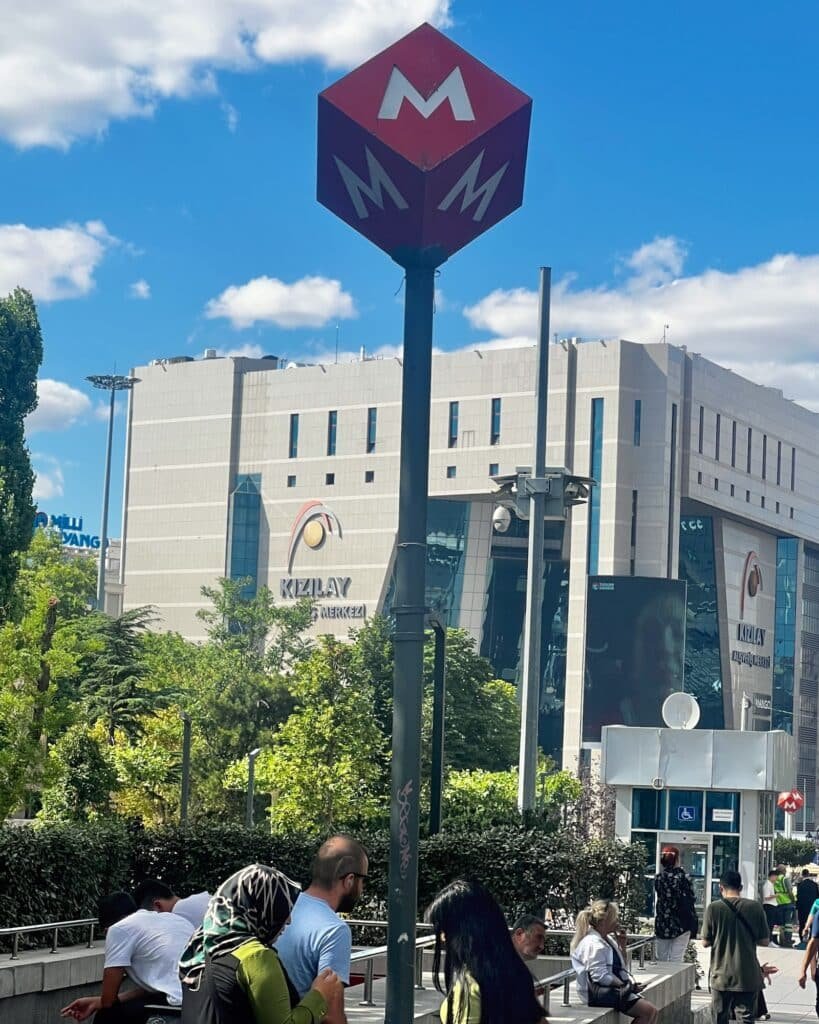
The Metro is probably my favorite way to get around Ankara.
No traffic.
No wondering whether someone is going to create an entirely new lane beside the existing lanes.
Just get on, sit down if you are lucky, and go.
Kızılay is the heart of the system, with connections that make it possible to travel toward Çayyolu and Koru, Batıkent and Törekent, Keçiören, and other parts of the city.
And yes, one of those stations is ODTÜ.
Naturally, I am completely unbiased about this being one of Ankara’s finest destinations.
Ahem.
During my MBA, the metro became part of the rhythm of my life. There was something comforting about emerging from the station, heading toward campus, and knowing exactly where I was going even when so much else about living in a new country still felt unfamiliar.
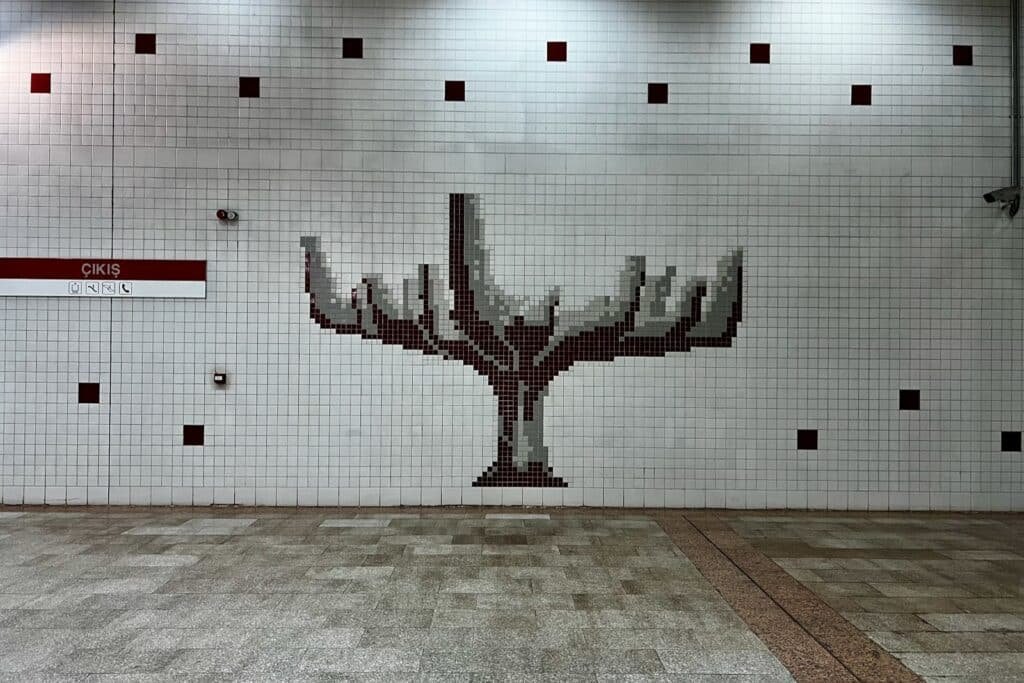
Public transportation has a funny way of becoming part of your personal geography.
Eventually, a station stops being just a station.
It becomes your station.
Ankaray: Small but Mighty
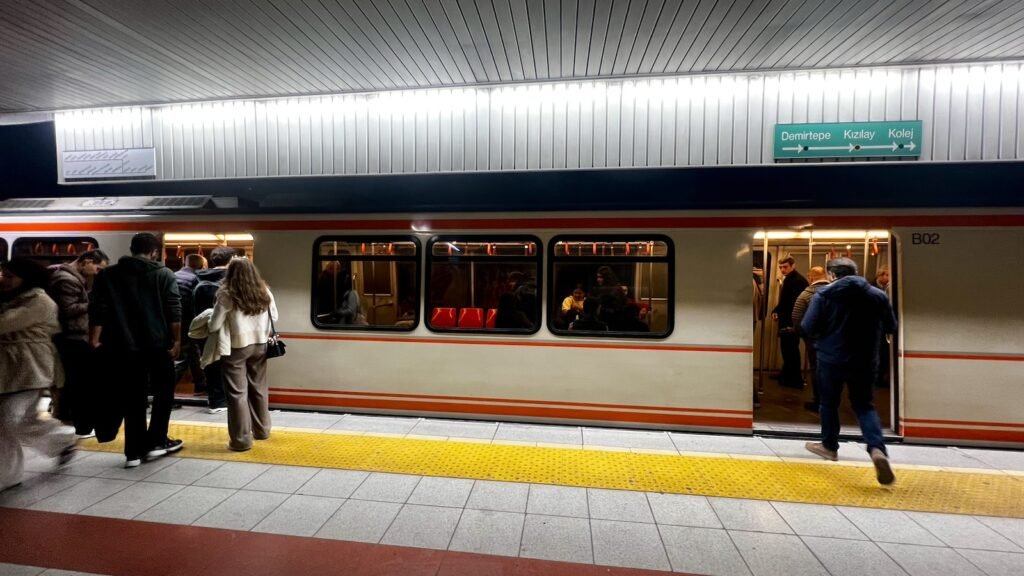
Ankaray is Ankara’s light-rail system, which is similar to a metro but operates on its own line. It connects AŞTİ, Ankara’s main intercity bus terminal, with Dikimevi, passing through several important neighborhoods and stopping at Kızılay, where passengers can transfer to the Metro.
It’s particularly convenient if you’re arriving in Ankara by intercity bus or traveling through the central part of the city. Although its route is relatively short, Ankaray provides an important connection between the bus terminal, residential neighborhoods, and the rest of the rail network.
And anything that helps me avoid navigating Ankara traffic deserves a small round of applause. 👏
Başkentray: Ankara’s Commuter Train
Başkentray is a little different from the Metro and Ankaray. Rather than primarily serving the city center, it’s a commuter railway connecting central Ankara with neighborhoods and districts farther east and west.
The line runs between Sincan and Kayaş, passing through important stations including Ankara Gar, where travelers can connect with other railway services. It’s particularly useful for people commuting longer distances across the city.
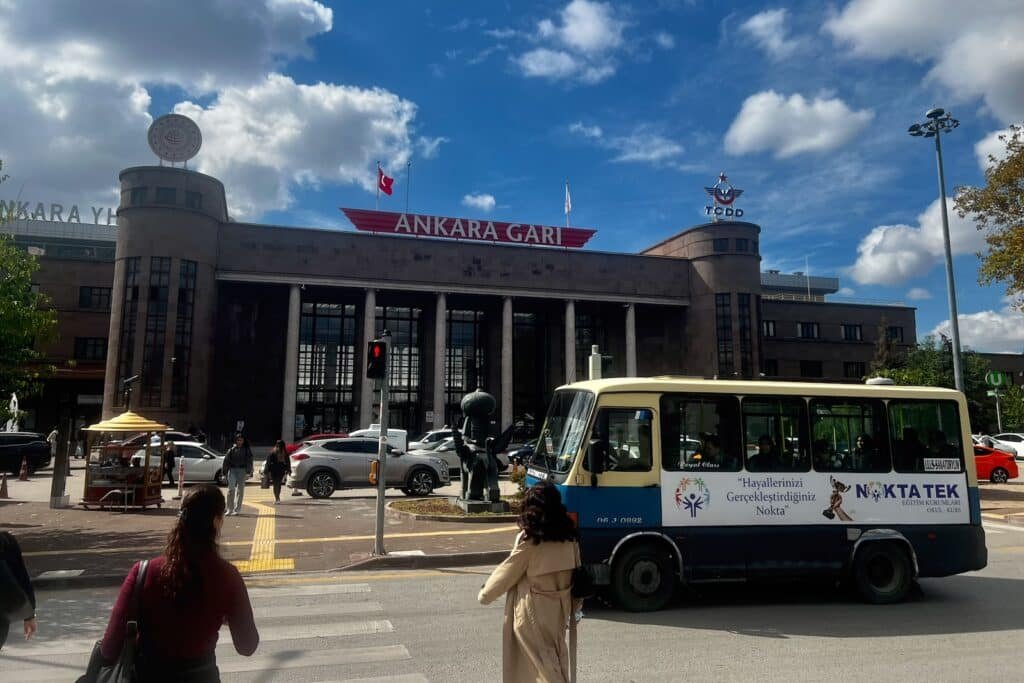
And here’s a little Turkish language lesson: başkent means “capital city,” while ray means “rail.” So Başkentray is an appropriately named railway for Türkiye’s capital!
And Then There Is the Dolmuş
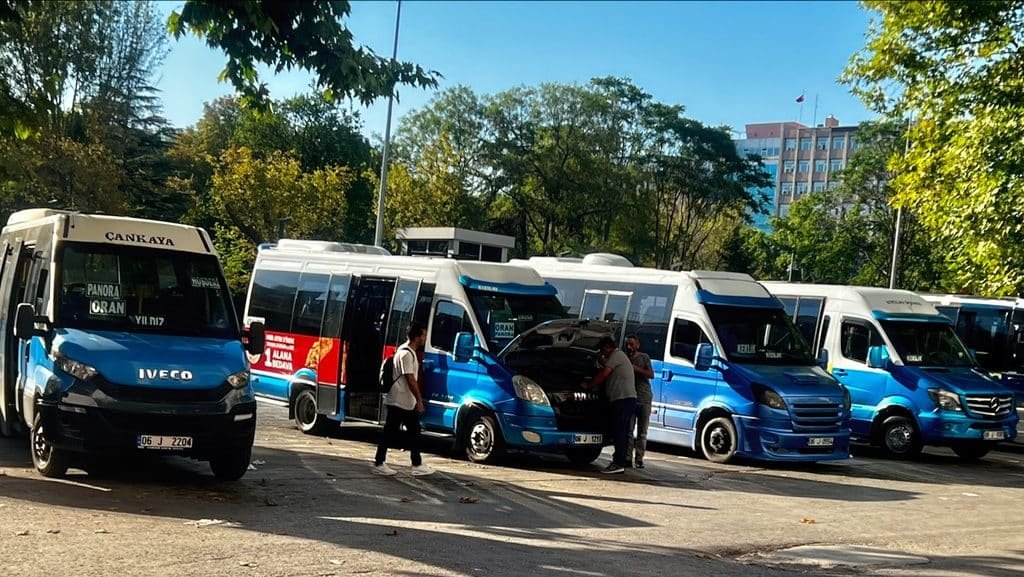
The dolmuş deserves its own category because it operates according to rules that seem perfectly obvious once you understand them and completely mysterious before you do.
A dolmuş is essentially a shared minibus running along an established route. Unlike an EGO bus, it does not require you to get on or off at a designated bus stop.
You wave one down, climb aboard, and pay your fare. When you’re ready to get off, there are two Turkish phrases that are particularly useful:
“Müsait bir yerde!” — At a convenient place!
“İnecek var!” — Someone wants to get off!
Both let the driver know you’d like to get off at the next safe, convenient location along the route.
And if you’re anything like me when I first arrived in Ankara, you’ll probably spend your first few rides silently rehearsing these phrases, waiting for the right moment to confidently announce your desire to stop.
Eventually, though, the system begins to make sense.
And once it does, dolmuşes become incredibly useful because they can reach places that aren’t always convenient to access by Metro or EGO bus.
The Part I Appreciate Most
What I love about public transportation in Ankara is not really the buses or trains themselves.
It is what they have allowed me to do.
They allowed me to attend university without owning a car.
They let me explore neighborhoods I might otherwise never have visited.
They have carried me to parks, restaurants, appointments, shopping trips, language classes, Toastmasters meetings, and countless ordinary errands.
They helped transform Ankara from a place I was trying to understand into a city I knew how to move through.
That matters when you move somewhere new.
Learning transportation is one of the quiet milestones of becoming comfortable in a city. At first, every journey requires planning. You check the route four times. You worry that you will miss your stop. You screenshot directions because obviously your phone will choose that exact moment to betray you.
Then one day, you simply leave the house.
You know which bus to take.
You know where to transfer.
You know which Metro exit you want.
You know what to say when you want the dolmuş driver to stop.
And then one day, you realize you’re no longer finding your way around a strange city. You’re simply going about your day.
A Practical Guide to Getting Around Ankara
Because the practical details—fares, payment methods, Metro lines, apps, transfers, airport transportation, and the mysterious mechanics of the dolmuş—would turn this post into something roughly the length of a small transportation textbook, I created a separate Guide to Public Transportation in Ankara.
It includes the information I wish someone had handed me when I first arrived.
And together with my posts about driving and walking in Ankara, it completes what I suppose has accidentally become my Ankara Transportation Trilogy.
Move over, Tolkien.
Whether you’re exploring Ankara on foot, navigating its traffic behind the wheel, or hopping aboard the Metro, there’s always something new to discover. I hope my experiences and guides make finding your way around this wonderful city a little easier.
And if you see me sitting happily on the Metro watching Ankara pass by?
Apparently, this is who I am now.
Wishing you smooth rides, easy connections, and always finding an empty seat,
With love from Ankara,
Tiffles, Stormy, and Smokey 🐾
Helpful Resources for Getting Around Ankara
Planning your next trip across the city? These resources can help you navigate Ankara’s public transportation system.
- EGO General Directorate: Official information about Ankara’s buses, Metro, Ankaray, fares, schedules, and service updates. The website is primarily in Turkish, but you can use your browser’s translation feature to view it in English.
- EGO CEP’te: Ankara’s official public transportation app, useful for checking bus routes, stop locations, and estimated arrival times. Available through your phone’s app store.
- TCDD Taşımacılık: Official train schedules and ticket booking for intercity and high-speed rail journeys throughout Türkiye.